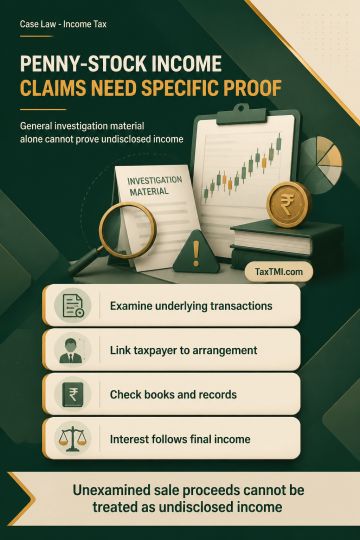
Penny-stock additions require transaction-specific evidence; general investigation material alone cannot establish undisclosed income or accommodation...
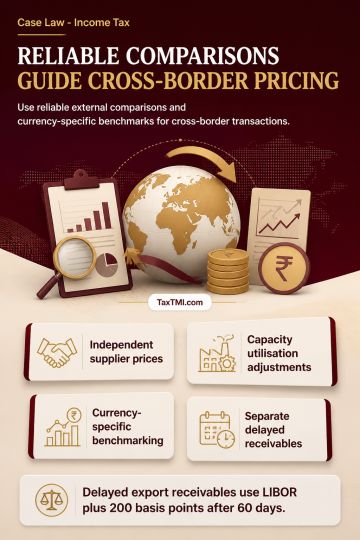
Transfer pricing comparability prioritises reliable external CUPs and foreign-currency LIBOR benchmarks for exports, borrowings and delayed receivable...
Section 153C satisfaction and seized electronic records sustained unexplained-investment addition, subject to proportionate ownership-share verificati...
Section 107 of the GST law allows an appeal within three months, with only one further month condonable on sufficient cause; once that outer limit expires, neither the Appellate Authority nor the HC can extend time. Applying Supreme Court guidance, the Court held that writ jurisdiction cannot be used to override the statutory limitation scheme, and explanations such as accountant negligence did not justify condonation beyond the cap. Having already pursued the statutory appeal, the petitioner was also not permitted to reopen the show-cause notice or cancellation order in writ proceedings, especially where no appearance was made before the appellate authority despite opportunity. The writ petition was dismissed.
Section 107 of the GST law allows an appeal within three months, with only one further month condonable on sufficient cause; once that outer limit expires, neither the Appellate Authority nor the HC can extend time. Applying Supreme Court guidance, the Court held that writ jurisdiction cannot be used to override the statutory limitation scheme, and explanations such as accountant negligence did not justify condonation beyond the cap. Having already pursued the statutory appeal, the petitioner was also not permitted to reopen the show-cause notice or cancellation order in writ proceedings, especially where no appearance was made before the appellate authority despite opportunity. The writ petition was dismissed.
Note: It is a system-generated summary and is for quick reference only.
 TaxTMI
  TaxTMI
 of 4828





 Join Channel


