Vicarious liability for dishonoured company cheques may extend to non-signatory directors where complaints contain foundational responsibility avermen...
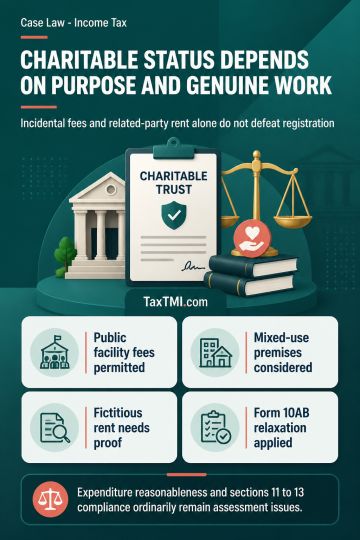
Charitable registration turns on predominant purpose and genuine activities, while incidental fees and related-party rent require supporting adverse m...
MAT book-profit adjustments exclude disallowances for exempt-income expenditure and demerger expenditure unless expressly listed under the statutory c...
Where an assessee claims that receipts appearing in Form 26AS...
Timing mismatch in income recognition requires verification whether receipts were already taxed in an earlier year; matter remitted for fresh examination.
Contents
Summary
Note
Bookmark
Share
✓ Copied successfully !
Print
Print Options
For full text, please login
Login to TaxTMI
Verification Pending
The Email Id has not been verified. Click on the link we have sent on
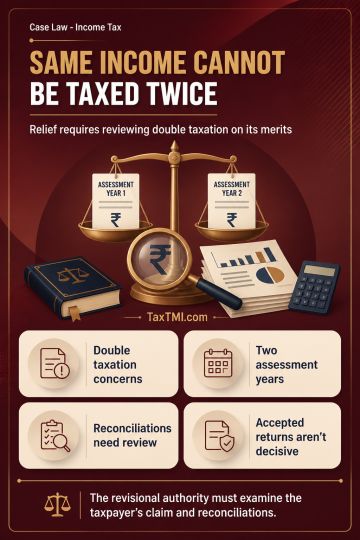
Where an assessee claims that receipts appearing in Form 26AS relate to an earlier year under accrual-based recognition, the crucial question is whether the same income was already taxed in that year, because double taxation of the same receipt is impermissible. The Tribunal found that the reconciliation between bills raised in the preceding year and current-year Form 26AS entries required factual verification. As adequate opportunity had not been given before the AO, and the appellate authority had not properly examined the earlier-year material, the matter was remitted for de novo verification. The assessee was to be given a reasonable opportunity to substantiate the reconciliation with supporting third-party evidence.
Where an assessee claims that receipts appearing in Form 26AS relate to an earlier year under accrual-based recognition, the crucial question is whether the same income was already taxed in that year, because double taxation of the same receipt is impermissible. The Tribunal found that the reconciliation between bills raised in the preceding year and current-year Form 26AS entries required factual verification. As adequate opportunity had not been given before the AO, and the appellate authority had not properly examined the earlier-year material, the matter was remitted for de novo verification. The assessee was to be given a reasonable opportunity to substantiate the reconciliation with supporting third-party evidence.
Note: It is a system-generated summary and is for quick reference only.
 TaxTMI
  TaxTMI
 of 4817








 Join Channel


