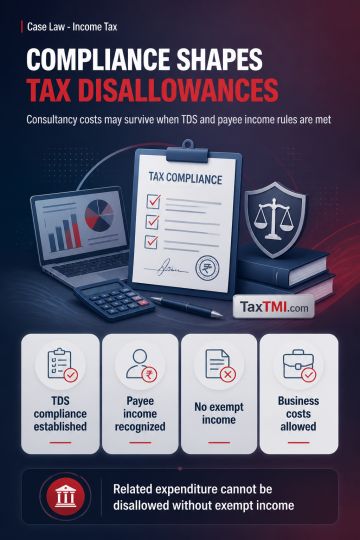
Tax deduction compliance and payee income recognition govern consultancy disallowance, while no exempt income prevents related expenditure disallowanc...
Derivative abetment liability fails when correctly declared imported components establish no underlying improper importation by the principal importer...
Tax exemption for regulatory authority income applies retrospectively, subject to non-commercial activity, unchanged income sources, and return filing...
An insolvency resolution professional was found to have failed to ensure that the approved resolution plan complied with Section 29A, Section 30(2) and Regulation 38(3)(e), leading to adverse findings and a referral for investigation. The NCLAT held that those findings were not malicious, perverse, or contrary to the record because they rested on an earlier coordinate Bench order already affirmed by the Supreme Court, and also on independent disciplinary proceedings where misconduct had been established and penalty imposed. It declined to re-examine the same allegations or take a contrary view, and dismissed the appeal.
An insolvency resolution professional was found to have failed to ensure that the approved resolution plan complied with Section 29A, Section 30(2) and Regulation 38(3)(e), leading to adverse findings and a referral for investigation. The NCLAT held that those findings were not malicious, perverse, or contrary to the record because they rested on an earlier coordinate Bench order already affirmed by the Supreme Court, and also on independent disciplinary proceedings where misconduct had been established and penalty imposed. It declined to re-examine the same allegations or take a contrary view, and dismissed the appeal.
Note: It is a system-generated summary and is for quick reference only.
 TaxTMI
  TaxTMI
 of 4821














 Join Channel