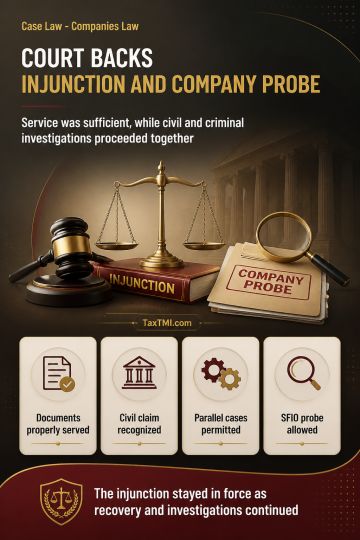
Ex parte injunction service requirements were substantially met, while civil recovery and SFIO investigation into provident fund defalcation continued...
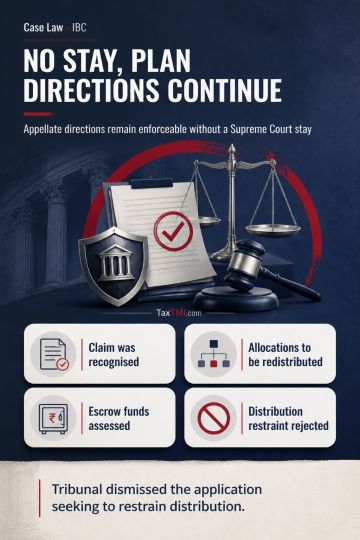
Enforcement of resolution-plan directions continues without a Supreme Court stay, preventing suspension of redistribution and escrowed-fund distributi...
Third-party ownership claims over attached property require Special Court adjudication where purchasers lack registered sale deeds and bona fides rema...
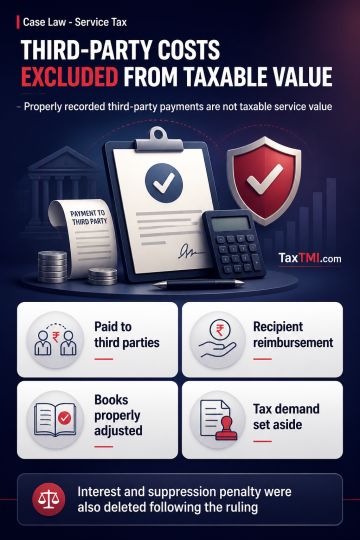
Pure-agent reimbursements in clearing and forwarding services are excluded from taxable value when qualifying third-party payments are properly record...
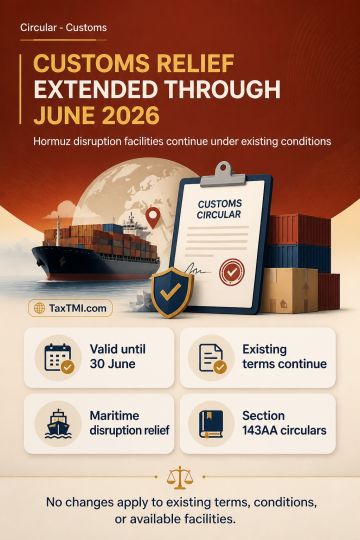
Customs relief for Strait of Hormuz maritime disruptions remains available, with existing conditions continuing unchanged through the extended validit...
Section 9D compliance is mandatory before statements recorded under section 14 of the Central Excise Act can be relied on; where the maker is not first examined and the statement is not admitted in accordance with section 9D, denial of cross-examination does not cure the defect, and such statements cannot support the demand. Clandestine manufacture and removal must be proved by positive, clinching corroborative evidence; in the absence of documentary support, excess inputs, unrecorded production, stock discrepancy, or transport records, the allegation failed. Penalty under rule 26 also could not stand without a finding that the goods were liable to confiscation, so the duty demand and penalties were set aside.
Section 9D compliance is mandatory before statements recorded under section 14 of the Central Excise Act can be relied on; where the maker is not first examined and the statement is not admitted in accordance with section 9D, denial of cross-examination does not cure the defect, and such statements cannot support the demand. Clandestine manufacture and removal must be proved by positive, clinching corroborative evidence; in the absence of documentary support, excess inputs, unrecorded production, stock discrepancy, or transport records, the allegation failed. Penalty under rule 26 also could not stand without a finding that the goods were liable to confiscation, so the duty demand and penalties were set aside.
Note: It is a system-generated summary and is for quick reference only.
 TaxTMI
  TaxTMI
 of 4819







 Join Channel


