Revisionary jurisdiction cannot reopen share capital assessments where adequate inquiry supports a permissible view and no independent error is establ...
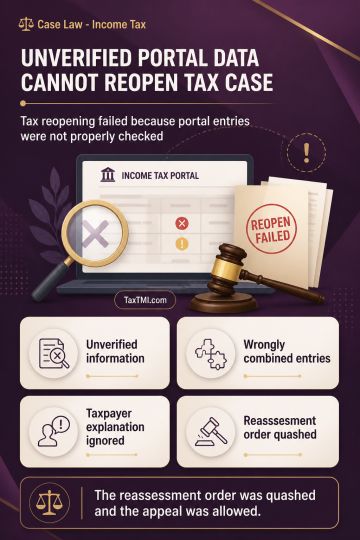
Reassessment jurisdiction fails where unverified portal information is aggregated without examining the taxpayer's explanation or relevance of entries...
Statutory sanction for delayed reassessment requires approval from the prescribed authority; approval by an inferior authority invalidates jurisdictio...
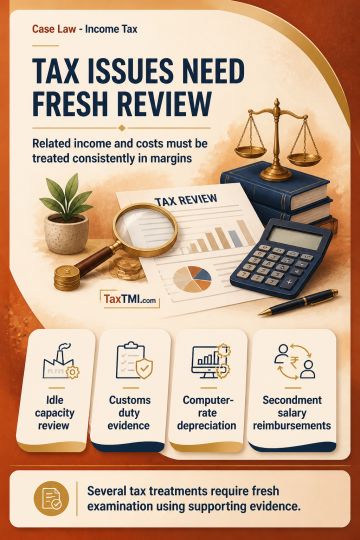
Transfer pricing margin adjustments require matching treatment of non-operating income and related costs, with comparability issues reconsidered on ev...
Preliminary-expense amortisation and MAT exempt-income adjustments prevailed, while trademark costs and managerial remuneration require fresh verifica...
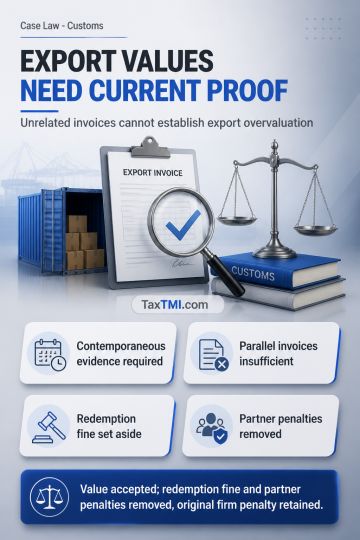
Export valuation requires contemporaneous evidence; unrelated invoices cannot prove overvaluation, and dual penalties on firm and partner are impermis...
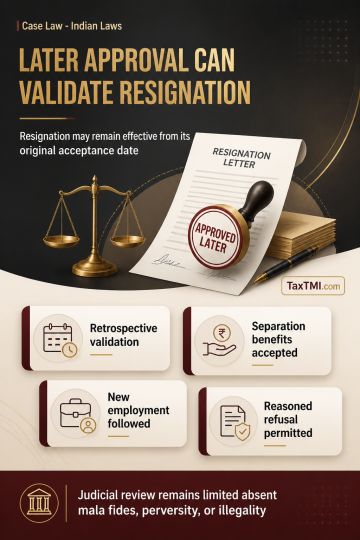
Ratification of resignation acceptance validates separation retrospectively, while withdrawal may be refused through reasoned administrative discretio...
Section 9D compliance is mandatory before statements recorded under section 14 of the Central Excise Act can be relied on; where the maker is not first examined and the statement is not admitted in accordance with section 9D, denial of cross-examination does not cure the defect, and such statements cannot support the demand. Clandestine manufacture and removal must be proved by positive, clinching corroborative evidence; in the absence of documentary support, excess inputs, unrecorded production, stock discrepancy, or transport records, the allegation failed. Penalty under rule 26 also could not stand without a finding that the goods were liable to confiscation, so the duty demand and penalties were set aside.
Section 9D compliance is mandatory before statements recorded under section 14 of the Central Excise Act can be relied on; where the maker is not first examined and the statement is not admitted in accordance with section 9D, denial of cross-examination does not cure the defect, and such statements cannot support the demand. Clandestine manufacture and removal must be proved by positive, clinching corroborative evidence; in the absence of documentary support, excess inputs, unrecorded production, stock discrepancy, or transport records, the allegation failed. Penalty under rule 26 also could not stand without a finding that the goods were liable to confiscation, so the duty demand and penalties were set aside.
Note: It is a system-generated summary and is for quick reference only.
 TaxTMI
  TaxTMI
 of 4817
















 Join Channel


