Transparency in technical bid evaluation requires disclosed standards and recorded reasons; opaque scoring invalidated tender awards and required fres...
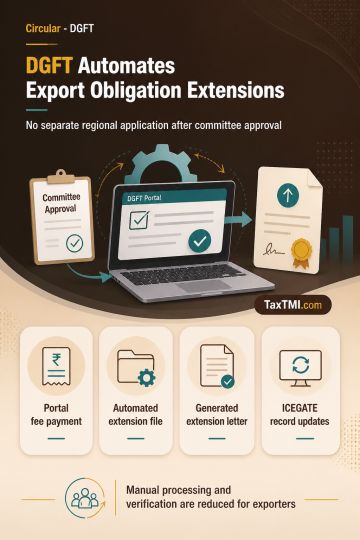
Automated export obligation extensions remove separate regional applications after committee approval for Advance Authorisation and EPCG authorisation...
International cargo transhipment through Indian ports continues with Customs-controlled storage, re-export safeguards, and coordinated multi-station m...
Section 9D compliance is mandatory before statements recorded under section 14 of the Central Excise Act can be relied on; where the maker is not first examined and the statement is not admitted in accordance with section 9D, denial of cross-examination does not cure the defect, and such statements cannot support the demand. Clandestine manufacture and removal must be proved by positive, clinching corroborative evidence; in the absence of documentary support, excess inputs, unrecorded production, stock discrepancy, or transport records, the allegation failed. Penalty under rule 26 also could not stand without a finding that the goods were liable to confiscation, so the duty demand and penalties were set aside.
Section 9D compliance is mandatory before statements recorded under section 14 of the Central Excise Act can be relied on; where the maker is not first examined and the statement is not admitted in accordance with section 9D, denial of cross-examination does not cure the defect, and such statements cannot support the demand. Clandestine manufacture and removal must be proved by positive, clinching corroborative evidence; in the absence of documentary support, excess inputs, unrecorded production, stock discrepancy, or transport records, the allegation failed. Penalty under rule 26 also could not stand without a finding that the goods were liable to confiscation, so the duty demand and penalties were set aside.
Note: It is a system-generated summary and is for quick reference only.
 TaxTMI
  TaxTMI
 of 4816














 Join Channel