Revisionary jurisdiction cannot reopen share capital assessments where adequate inquiry supports a permissible view and no independent error is establ...
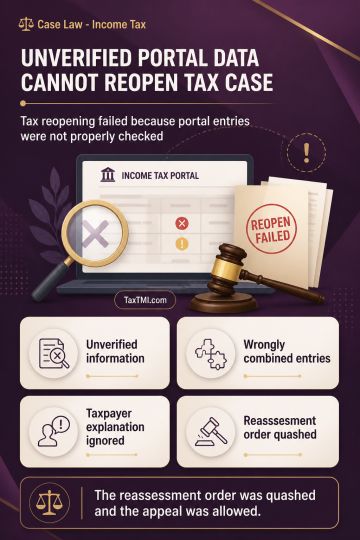
Reassessment jurisdiction fails where unverified portal information is aggregated without examining the taxpayer's explanation or relevance of entries...
Statutory sanction for delayed reassessment requires approval from the prescribed authority; approval by an inferior authority invalidates jurisdictio...
Transfer pricing margin adjustments require matching treatment of non-operating income and related costs, with comparability issues reconsidered on ev...
Preliminary-expense amortisation and MAT exempt-income adjustments prevailed, while trademark costs and managerial remuneration require fresh verifica...
Export valuation requires contemporaneous evidence; unrelated invoices cannot prove overvaluation, and dual penalties on firm and partner are impermis...
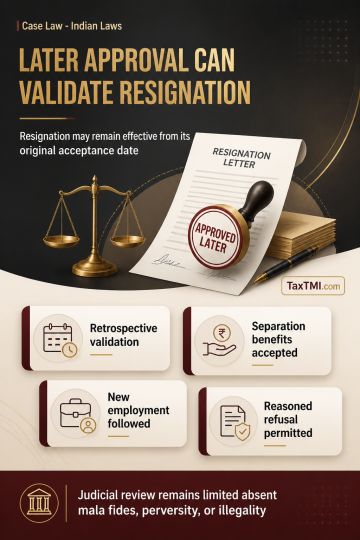
Ratification of resignation acceptance validates separation retrospectively, while withdrawal may be refused through reasoned administrative discretio...
The State policy for Special Economic Zones in Maharashtra made a clear promise of exemption from all State and local taxes, including octroi, and contemplated reimbursement where direct exemption was not feasible. The Court applied promissory estoppel and held that, absent any overriding public interest, the promise had to be honoured because it aligned with the SEZ Act and Rules and the policy objective of encouraging SEZ development. It accepted that the petitioner was entitled to refund of octroi paid with interest, subject to verification, and fastened liability on the State Government. Refund could not be ordered against the Municipal Corporation without the necessary statutory amendment, and relief for amendment of the octroi rules was declined because those rules had ceased to operate.
The State policy for Special Economic Zones in Maharashtra made a clear promise of exemption from all State and local taxes, including octroi, and contemplated reimbursement where direct exemption was not feasible. The Court applied promissory estoppel and held that, absent any overriding public interest, the promise had to be honoured because it aligned with the SEZ Act and Rules and the policy objective of encouraging SEZ development. It accepted that the petitioner was entitled to refund of octroi paid with interest, subject to verification, and fastened liability on the State Government. Refund could not be ordered against the Municipal Corporation without the necessary statutory amendment, and relief for amendment of the octroi rules was declined because those rules had ceased to operate.
Note: It is a system-generated summary and is for quick reference only.
 TaxTMI
  TaxTMI
 of 4817

















 Join Channel


