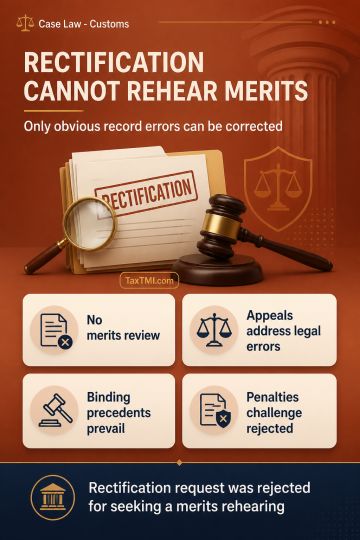
Rectification of mistake remains limited to self-evident record errors, preventing merits review through miscellaneous applications and preserving fin...
Tender creditworthiness conditions may extend to de facto Promoter Directors, with post-participation challenges generally barred absent arbitrariness...
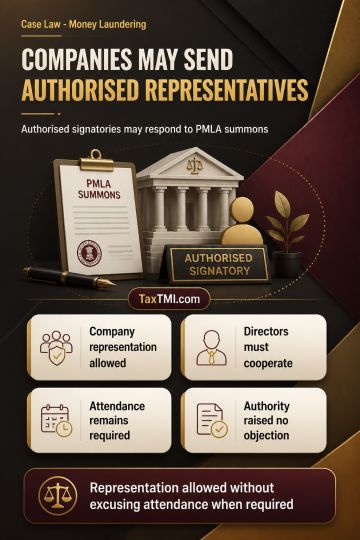
Corporate representation in PMLA summons proceedings permitted through an authorised signatory, subject to directors' continuing cooperation and atten...
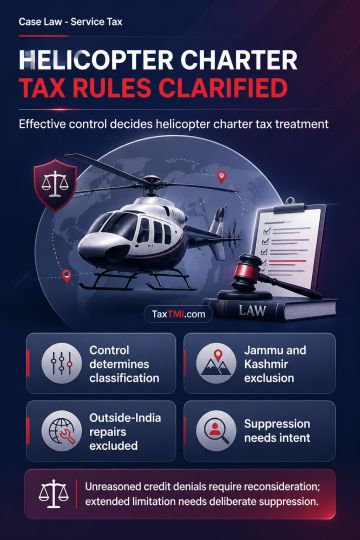
Helicopter charter classification requires effective control analysis, while territorial performance, reasoned credit orders and wilful suppression de...
A writ petition challenging an order-in-original and recovery proceedings was not entertained because the petitioner had an available statutory appellate remedy with a prescribed limitation period and limited condonation, but failed to use it in time. The High Court held that Article 226 cannot ordinarily be invoked to bypass the statutory machinery where the party has disabled itself from pursuing the appellate remedy by its own default. Relying on Supreme Court authority, the Court declined writ jurisdiction and dismissed the petition after finding that the permissible appellate period had already expired.
A writ petition challenging an order-in-original and recovery proceedings was not entertained because the petitioner had an available statutory appellate remedy with a prescribed limitation period and limited condonation, but failed to use it in time. The High Court held that Article 226 cannot ordinarily be invoked to bypass the statutory machinery where the party has disabled itself from pursuing the appellate remedy by its own default. Relying on Supreme Court authority, the Court declined writ jurisdiction and dismissed the petition after finding that the permissible appellate period had already expired.
Note: It is a system-generated summary and is for quick reference only.
 TaxTMI
  TaxTMI
 of 4823










 Join Channel