Functional comparability under TNMM requires highway contract benchmarks to reflect operation, maintenance and transfer activities, requiring fresh be...
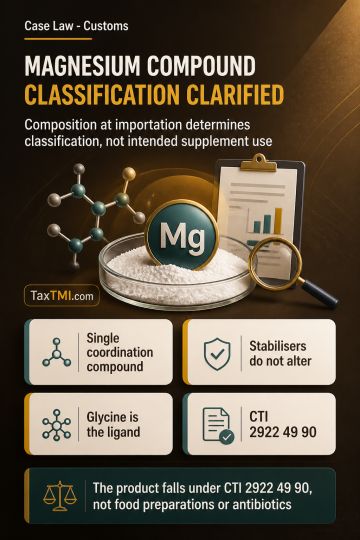
Objective characteristics govern magnesium bis-glycinate chelate classification as an amino-acid coordination compound, not a food preparation or anti...
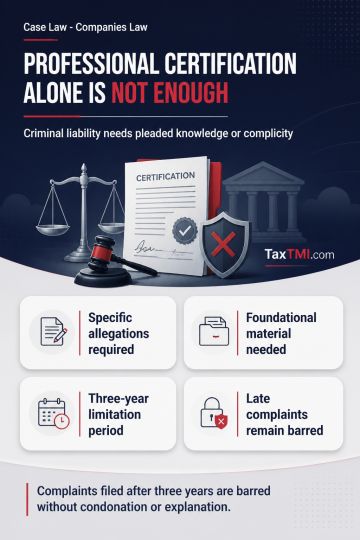
Independent professional certification requires pleaded knowledge or complicity for criminal liability; untimely complaints remain barred by limitatio...
A writ petition challenging an order-in-original and recovery proceedings was not entertained because the petitioner had an available statutory appellate remedy with a prescribed limitation period and limited condonation, but failed to use it in time. The High Court held that Article 226 cannot ordinarily be invoked to bypass the statutory machinery where the party has disabled itself from pursuing the appellate remedy by its own default. Relying on Supreme Court authority, the Court declined writ jurisdiction and dismissed the petition after finding that the permissible appellate period had already expired.
A writ petition challenging an order-in-original and recovery proceedings was not entertained because the petitioner had an available statutory appellate remedy with a prescribed limitation period and limited condonation, but failed to use it in time. The High Court held that Article 226 cannot ordinarily be invoked to bypass the statutory machinery where the party has disabled itself from pursuing the appellate remedy by its own default. Relying on Supreme Court authority, the Court declined writ jurisdiction and dismissed the petition after finding that the permissible appellate period had already expired.
Note: It is a system-generated summary and is for quick reference only.
 TaxTMI
  TaxTMI
 of 4827












 Join Channel