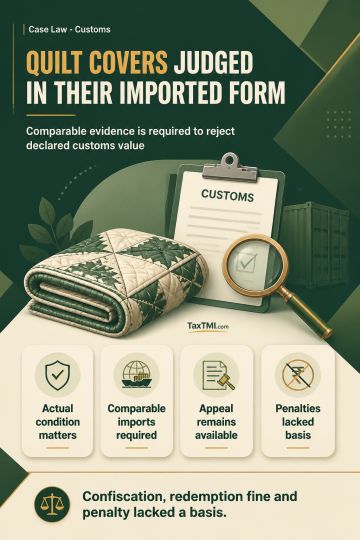
Customs valuation and classification require comparable evidence and assessment of imported goods in their actual condition, invalidating related pena...
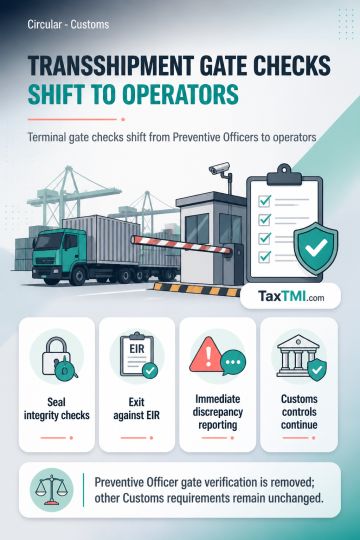
Terminal gate verification for transshipment containers shifts to operators, while Customs controls and discrepancy reporting requirements remain mand...
Page of 4830
Press 'Enter' after typing page number.
901 to 920 of 96587 Results
❮
❯
❯❯
0 / 200
Expand Note
Add to Folder
No Folders have been created
+
Are you sure you want to delete "My most important" ?
A writ petition challenging an order-in-original and recovery proceedings was not entertained because the petitioner had an available statutory appellate remedy with a prescribed limitation period and limited condonation, but failed to use it in time. The High Court held that Article 226 cannot ordinarily be invoked to bypass the statutory machinery where the party has disabled itself from pursuing the appellate remedy by its own default. Relying on Supreme Court authority, the Court declined writ jurisdiction and dismissed the petition after finding that the permissible appellate period had already expired.
A writ petition challenging an order-in-original and recovery proceedings was not entertained because the petitioner had an available statutory appellate remedy with a prescribed limitation period and limited condonation, but failed to use it in time. The High Court held that Article 226 cannot ordinarily be invoked to bypass the statutory machinery where the party has disabled itself from pursuing the appellate remedy by its own default. Relying on Supreme Court authority, the Court declined writ jurisdiction and dismissed the petition after finding that the permissible appellate period had already expired.
Note: It is a system-generated summary and is for quick reference only.
 TaxTMI
  TaxTMI
 of 4830








 Join Channel