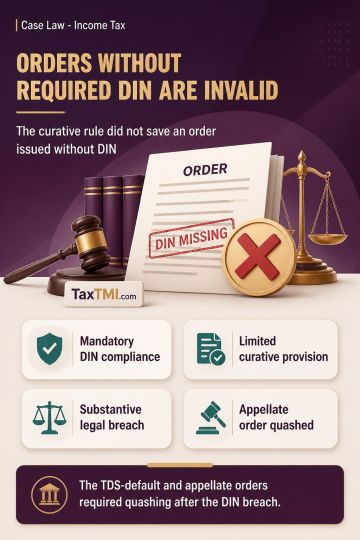
Document Identification Number compliance renders TDS-default orders invalid where mandatory DIN requirements are breached and curative provision does...
The appellate authority had no power to condone delay beyond the statutory limit under Section 107, so its refusal to entertain the belated appeal was upheld. The High Court, however, found that the original adjudication order had not been properly communicated and the petitioner should not be left without a remedy. Exercising writ jurisdiction under Article 226 and applying the principle recognised in Tecnimont Private Limited, the Court condoned the delay independently, permitted revival of the appeal, and directed that the matter be decided on merits in accordance with law.
The appellate authority had no power to condone delay beyond the statutory limit under Section 107, so its refusal to entertain the belated appeal was upheld. The High Court, however, found that the original adjudication order had not been properly communicated and the petitioner should not be left without a remedy. Exercising writ jurisdiction under Article 226 and applying the principle recognised in Tecnimont Private Limited, the Court condoned the delay independently, permitted revival of the appeal, and directed that the matter be decided on merits in accordance with law.
Note: It is a system-generated summary and is for quick reference only.
 TaxTMI
  TaxTMI
 of 4918