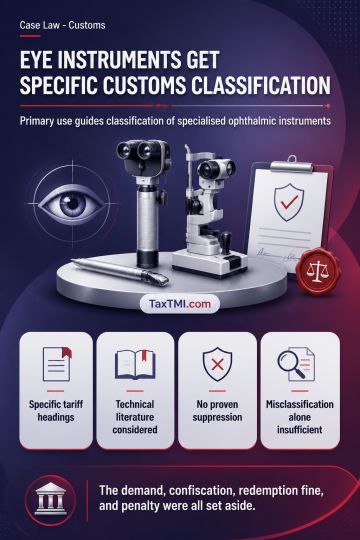
Specific tariff classification for ophthalmic instruments and extended limitation principles determine the treatment of duty demands, confiscation, an...
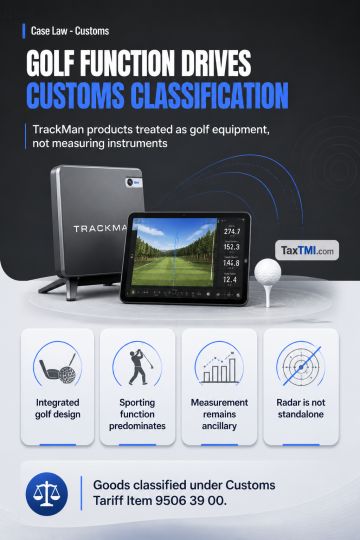
Integrated golf function determines classification, placing launch monitors and simulators under other golf equipment rather than measuring instrument...
Public servant status under anti-corruption law extends to recognised stock exchange leadership; constitutional and sanction challenges do not succeed...
Acquiescence, homebuyer protection and clean-slate resolution principles prevent landowners from disrupting an integrated project through late termina...
Rebate received from a bank for payment of excise duty through a corporate card was treated by the AAR as a post-transaction monetary adjustment, not consideration for an identifiable supply of goods or services. Because taxable supply under the GST law requires consideration and a quid pro quo, and the rebate merely reduced the applicant's monetary liability, it fell within a transaction in money and outside the scope of supply. The Authority also noted the arrangement operated as short-term financial accommodation, with the rebate functioning as a discount linked to that facility. The rebate was therefore not liable to GST.
Rebate received from a bank for payment of excise duty through a corporate card was treated by the AAR as a post-transaction monetary adjustment, not consideration for an identifiable supply of goods or services. Because taxable supply under the GST law requires consideration and a quid pro quo, and the rebate merely reduced the applicant's monetary liability, it fell within a transaction in money and outside the scope of supply. The Authority also noted the arrangement operated as short-term financial accommodation, with the rebate functioning as a discount linked to that facility. The rebate was therefore not liable to GST.
Note: It is a system-generated summary and is for quick reference only.
 TaxTMI
  TaxTMI
 of 4819










 Join Channel