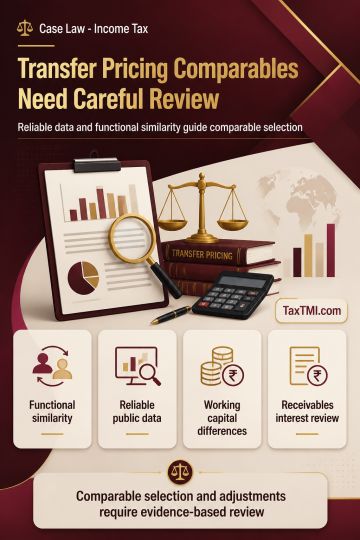
Transfer pricing comparability requires functional alignment, reliable financial data, and careful review of working capital and receivables adjustmen...
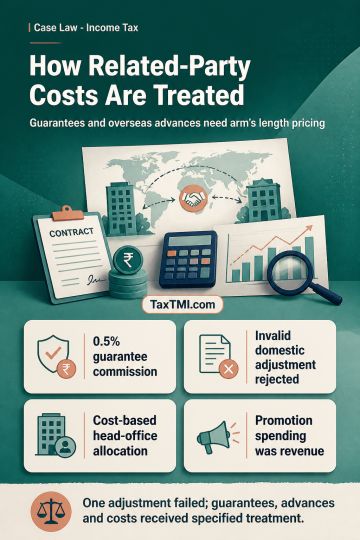
Transfer pricing rules require benchmarking corporate guarantees and associated-enterprise advances, while invalid domestic-transaction adjustments ca...
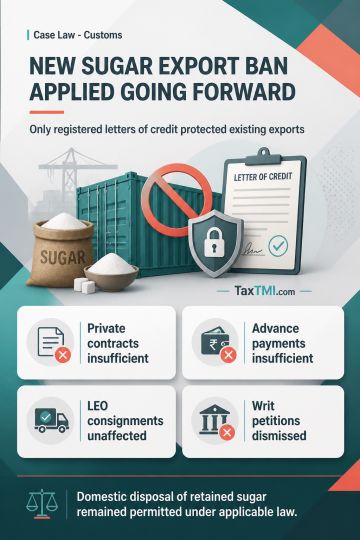
Prospective sugar export prohibition required registered letters of credit; private contracts and export quotas created no enforceable continuation ri...
Retroactive interim-moratorium exclusion permits protective asset disclosure and preservation measures against personal guarantors pending arbitration...
Rebate received from a bank for payment of excise duty through a corporate card was treated by the AAR as a post-transaction monetary adjustment, not consideration for an identifiable supply of goods or services. Because taxable supply under the GST law requires consideration and a quid pro quo, and the rebate merely reduced the applicant's monetary liability, it fell within a transaction in money and outside the scope of supply. The Authority also noted the arrangement operated as short-term financial accommodation, with the rebate functioning as a discount linked to that facility. The rebate was therefore not liable to GST.
Rebate received from a bank for payment of excise duty through a corporate card was treated by the AAR as a post-transaction monetary adjustment, not consideration for an identifiable supply of goods or services. Because taxable supply under the GST law requires consideration and a quid pro quo, and the rebate merely reduced the applicant's monetary liability, it fell within a transaction in money and outside the scope of supply. The Authority also noted the arrangement operated as short-term financial accommodation, with the rebate functioning as a discount linked to that facility. The rebate was therefore not liable to GST.
Note: It is a system-generated summary and is for quick reference only.
 TaxTMI
  TaxTMI
 of 4827










 Join Channel