Development agreements require legal possession or effective enjoyment for capital gains transfer; permissive possession and deferred consideration de...
Prolonged sterilisation of development rights supports capital-gains treatment, while business-income disallowances cannot govern capital-gains comput...
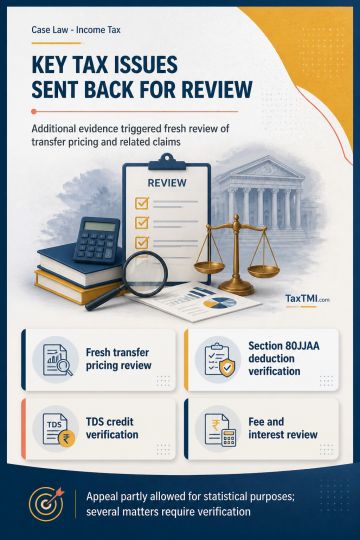
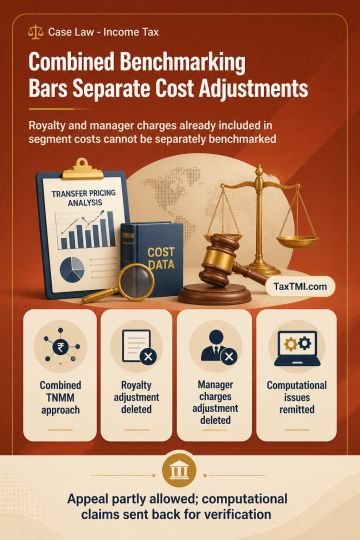
Additional evidence in transfer pricing dispute leads to fresh examination, while tax deductions, TDS credit, fee and refund interest require verifica...
Category II AIF pass-through taxation preserves non-business income character; investment receipts cannot be reclassified without applying recognised ...
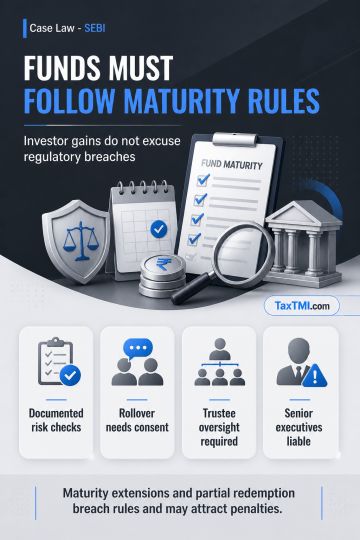
Mutual fund maturity rules require proper rollover, redemption, disclosure, and due diligence; investor gains cannot excuse regulatory breaches or pen...
Funds remitted by a non-resident investor were treated as investment on repatriation basis because no shares were allotted, part of the money was remitted back, and the company's own records and filings supported that characterisation; Regulation 5(1) therefore applied, not the non-repatriation scheme. Once that position was established, failure to intimate RBI, issue shares, or refund within the prescribed period constituted contraventions under FEMA. The managing director was also liable under the person-in-charge provision because the transactions were directly linked to him and he showed no lack of knowledge or due diligence. Penalty followed despite absence of mens rea, cross-examination was properly refused for want of prejudice, and only the quantum of penalty was reduced.
Funds remitted by a non-resident investor were treated as investment on repatriation basis because no shares were allotted, part of the money was remitted back, and the company's own records and filings supported that characterisation; Regulation 5(1) therefore applied, not the non-repatriation scheme. Once that position was established, failure to intimate RBI, issue shares, or refund within the prescribed period constituted contraventions under FEMA. The managing director was also liable under the person-in-charge provision because the transactions were directly linked to him and he showed no lack of knowledge or due diligence. Penalty followed despite absence of mens rea, cross-examination was properly refused for want of prejudice, and only the quantum of penalty was reduced.
Note: It is a system-generated summary and is for quick reference only.
 TaxTMI
  TaxTMI
 of 4823















 Join Channel