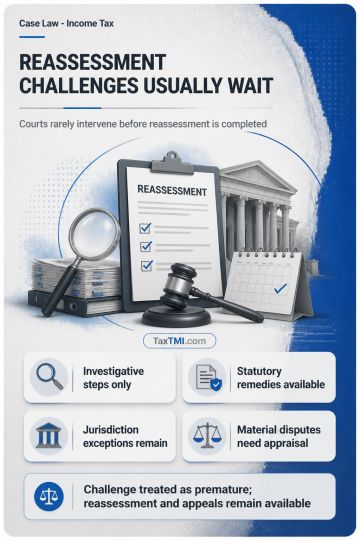
Preliminary reassessment proceedings generally require statutory remedies unless jurisdiction is wholly absent or mandatory conditions are patently br...
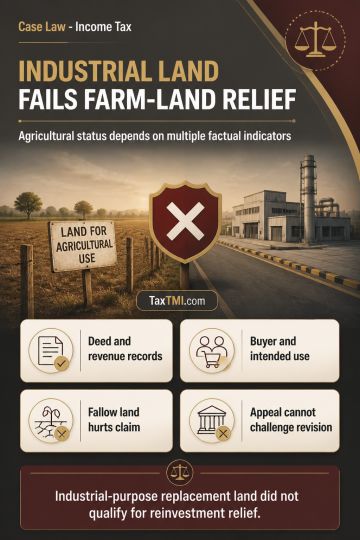
Agricultural land classification requires cumulative factual indicators, while industrial-purpose land and absent agricultural use defeat reinvestment...
NCLAT held that Regulation 39(1B)(b) does not bar consideration of a resolution plan merely because an additional member is inducted into an already shortlisted consortium, since a consortium is not treated as a new "person" under Section 3(23). The tribunal found no evidence that the plan was belated or that the inducted member was ineligible under Section 29A, and noted that the induction could improve the consortium's financial viability and value for the corporate debtor. As evaluation and negotiation of resolution plans lie within the CoC's commercial wisdom, and no statutory prohibition was shown, the challenge to the plan's consideration was rejected and the order upheld.
NCLAT held that Regulation 39(1B)(b) does not bar consideration of a resolution plan merely because an additional member is inducted into an already shortlisted consortium, since a consortium is not treated as a new "person" under Section 3(23). The tribunal found no evidence that the plan was belated or that the inducted member was ineligible under Section 29A, and noted that the induction could improve the consortium's financial viability and value for the corporate debtor. As evaluation and negotiation of resolution plans lie within the CoC's commercial wisdom, and no statutory prohibition was shown, the challenge to the plan's consideration was rejected and the order upheld.
Note: It is a system-generated summary and is for quick reference only.
 TaxTMI
  TaxTMI
 of 4828











 Join Channel


