Additional evidence in transfer pricing dispute leads to fresh examination, while tax deductions, TDS credit, fee and refund interest require verifica...
Category II AIF pass-through taxation preserves non-business income character; investment receipts cannot be reclassified without applying recognised ...
Mutual fund maturity rules require proper rollover, redemption, disclosure, and due diligence; investor gains cannot excuse regulatory breaches or pen...
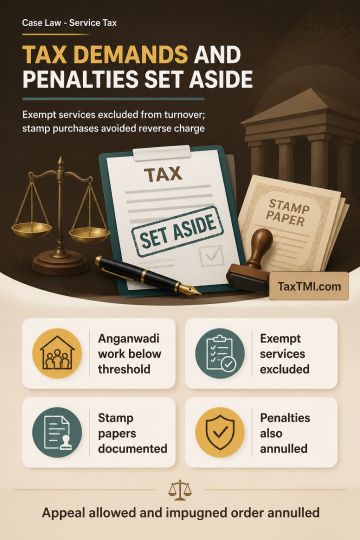
Threshold exemption excludes exempt services, while stamp-paper purchases avoid reverse charge; consequential service tax penalties were also set asid...
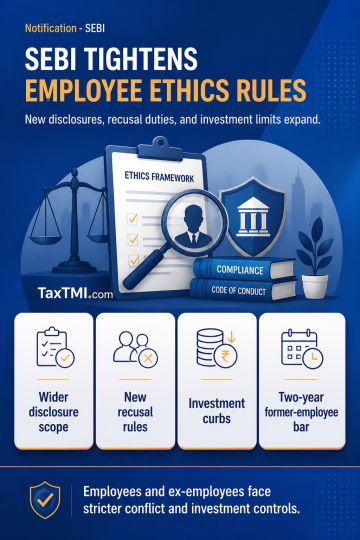
Employee conflict disclosures and investment restrictions expand with new recusal duties, post-employment limits, and compliance reporting requirement...
GST classification of biodiesel-HSD blends follows the Customs Tariff Act, 1975 and the HSN Explanatory Notes adopted for GST interpretation. Blends containing 70% or more petroleum oils fall under Heading 2710: B20, conforming to IS 16531, is classifiable under tariff item 27102020, while B30 falls under the residual tariff item 27102090 because no specific entry covers it. Blends containing less than 70% petroleum oils are excluded from Heading 2710 and fall under Chapter 38: B40, B50, B60 and B70 are classifiable under tariff item 38260000 as biodiesel and mixtures thereof.
GST classification of biodiesel-HSD blends follows the Customs Tariff Act, 1975 and the HSN Explanatory Notes adopted for GST interpretation. Blends containing 70% or more petroleum oils fall under Heading 2710: B20, conforming to IS 16531, is classifiable under tariff item 27102020, while B30 falls under the residual tariff item 27102090 because no specific entry covers it. Blends containing less than 70% petroleum oils are excluded from Heading 2710 and fall under Chapter 38: B40, B50, B60 and B70 are classifiable under tariff item 38260000 as biodiesel and mixtures thereof.
Note: It is a system-generated summary and is for quick reference only.
 TaxTMI
  TaxTMI
 of 4819














 Join Channel


