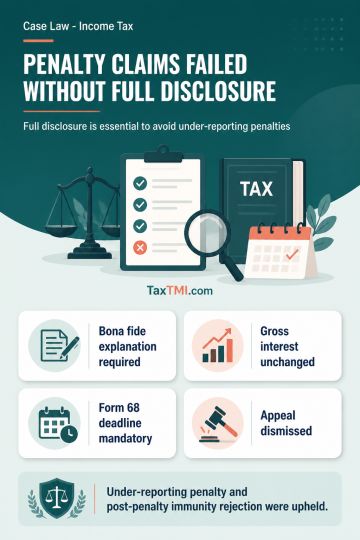
Bona fide disclosure requirements govern under-reporting penalties, and post-penalty immunity applications cannot secure available statutory protectio...
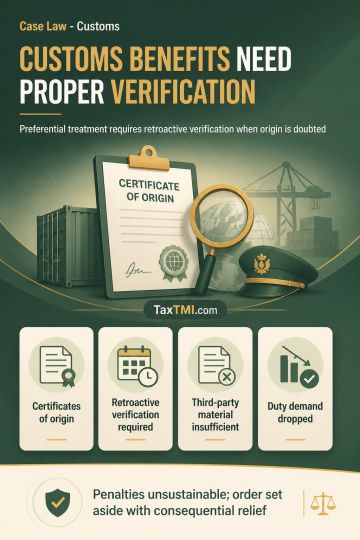
Certificate-of-origin verification procedure governs preferential customs benefits; denial without retroactive verification was set aside with consequ...
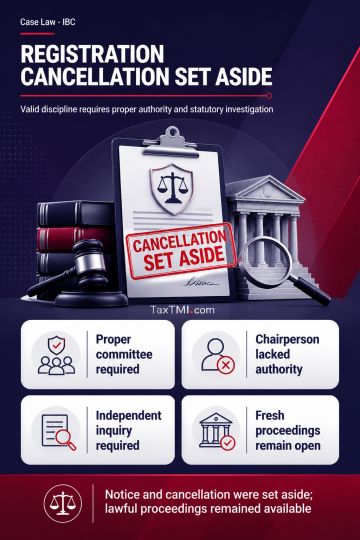
Disciplinary Committee jurisdiction and mandatory investigation requirements invalidated cancellation of an insolvency professional's registration and...
Retention of seized property survives where recorded reasons support proceeds of crime, while stayed investigation periods are excluded from limitatio...
Penalty under section 112(b)(ii) could not be sustained where the only basis was a higher amount charged in earlier clearances, because that circumstance created at most a presumption and did not prove knowledge or conscious participation in improper importation. The Tribunal noted that the Embassy documents were genuine and that the appellant's role was limited to forwarding email and documents to the customs broker who handled clearance. In the absence of material showing involvement in duty evasion or importation of goods liable to confiscation, the penalty was without authority of law and was set aside.
Penalty under section 112(b)(ii) could not be sustained where the only basis was a higher amount charged in earlier clearances, because that circumstance created at most a presumption and did not prove knowledge or conscious participation in improper importation. The Tribunal noted that the Embassy documents were genuine and that the appellant's role was limited to forwarding email and documents to the customs broker who handled clearance. In the absence of material showing involvement in duty evasion or importation of goods liable to confiscation, the penalty was without authority of law and was set aside.
Note: It is a system-generated summary and is for quick reference only.
 TaxTMI
  TaxTMI
 of 4827







 Join Channel