Public servant status under anti-corruption law extends to recognised stock exchange leadership; constitutional and sanction challenges do not succeed...
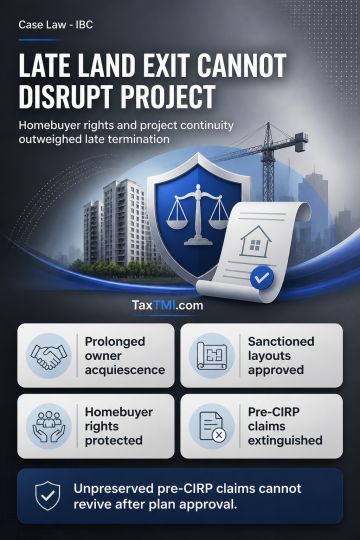
Acquiescence, homebuyer protection and clean-slate resolution principles prevent landowners from disrupting an integrated project through late termina...
Withdrawal of a Section 9 insolvency petition on the basis of settlement brings the lis to an end, and restoration is not maintainable unless the withdrawal order expressly reserves that liberty. The NCLAT held that a settlement, once acted on through consensual withdrawal, is executable as a concluded arrangement, but the law of restoration applicable to dismissed-for-default matters does not apply. Breach of settlement terms does not amount to a fresh operational debt default justifying revival of the concluded insolvency proceeding; the proper remedy lies in enforcement or recovery before the appropriate forum in accordance with law. The appeal against rejection of restoration was therefore upheld.
Withdrawal of a Section 9 insolvency petition on the basis of settlement brings the lis to an end, and restoration is not maintainable unless the withdrawal order expressly reserves that liberty. The NCLAT held that a settlement, once acted on through consensual withdrawal, is executable as a concluded arrangement, but the law of restoration applicable to dismissed-for-default matters does not apply. Breach of settlement terms does not amount to a fresh operational debt default justifying revival of the concluded insolvency proceeding; the proper remedy lies in enforcement or recovery before the appropriate forum in accordance with law. The appeal against rejection of restoration was therefore upheld.
Note: It is a system-generated summary and is for quick reference only.
 TaxTMI
  TaxTMI
 of 4823




 Join Channel