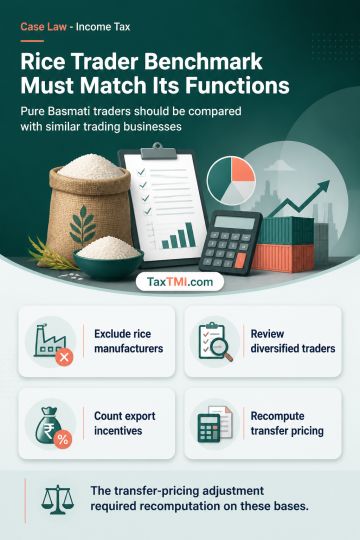
TNMM functional comparability requires excluding rice manufacturers from a pure Basmati rice trader's benchmark and recognising operating export recei...
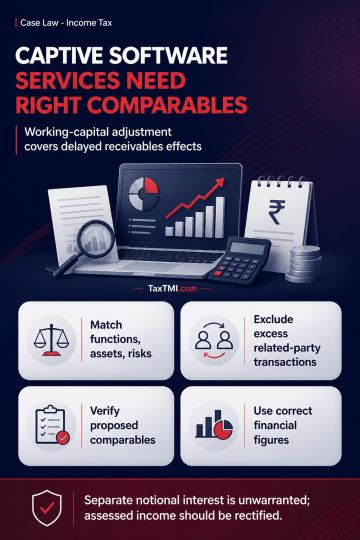
Working-capital adjustment subsumes delayed-receivable effects in TNMM benchmarking of captive software-development services, avoiding separate notion...
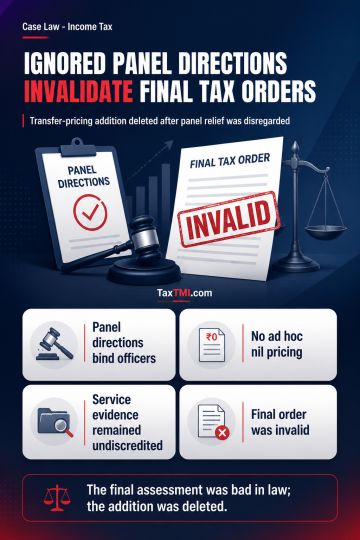
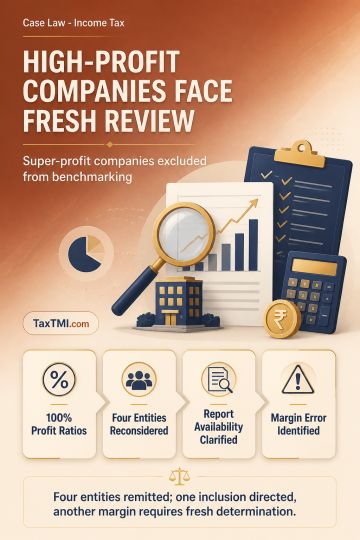
Transfer-pricing comparability requires exclusion of financially illogical super-profit comparables and correction of unsupported annual-report and ma...
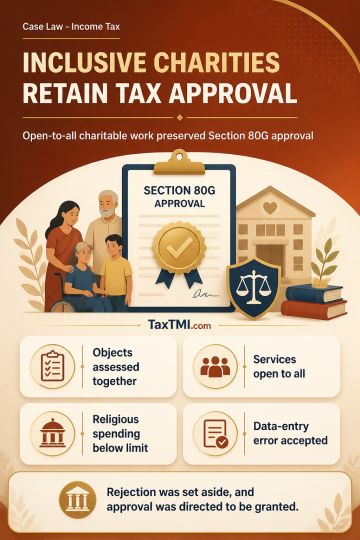
Charitable character assessment preserves Section 80G approval despite inclusive spiritual teachings and incidental religious expenditure within the s...
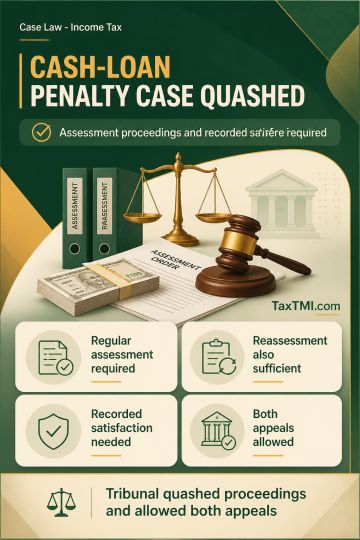
Penalty proceedings for cash-loan acceptance require assessment proceedings and recorded Assessing Officer satisfaction; absent these, the proceedings...
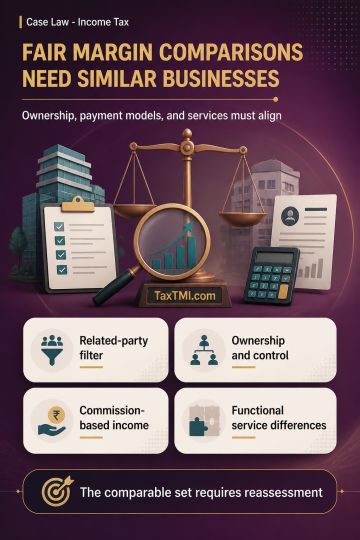
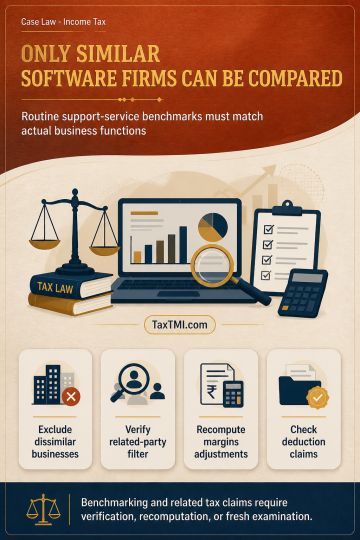
Functional comparability governs software-service benchmarking: dissimilar companies are excluded, while related-party filters, margins and working-ca...
A promoter's restructuring proposal was treated as not being a resolution plan under the I&B Code because it was not submitted in accordance with the CIRP framework, including the expression of interest process and the requirements of Section 30(2). The Appellate Tribunal held that such a proposal could, at best, be considered a Section 12A withdrawal request to financial creditors, not a compliant resolution plan. As no valid plan had been approved, liquidation followed under Section 33(1)(b). The Tribunal also noted that the corporate debtor had already been sold in liquidation and a sale certificate issued, making the appeal infructuous and leaving no effective relief available.
A promoter's restructuring proposal was treated as not being a resolution plan under the I&B Code because it was not submitted in accordance with the CIRP framework, including the expression of interest process and the requirements of Section 30(2). The Appellate Tribunal held that such a proposal could, at best, be considered a Section 12A withdrawal request to financial creditors, not a compliant resolution plan. As no valid plan had been approved, liquidation followed under Section 33(1)(b). The Tribunal also noted that the corporate debtor had already been sold in liquidation and a sale certificate issued, making the appeal infructuous and leaving no effective relief available.
Note: It is a system-generated summary and is for quick reference only.
 TaxTMI
  TaxTMI
 of 4830



 Join Channel


