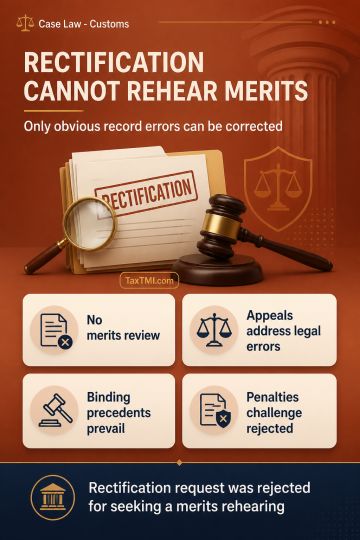
Rectification of mistake remains limited to self-evident record errors, preventing merits review through miscellaneous applications and preserving fin...
Tender creditworthiness conditions may extend to de facto Promoter Directors, with post-participation challenges generally barred absent arbitrariness...
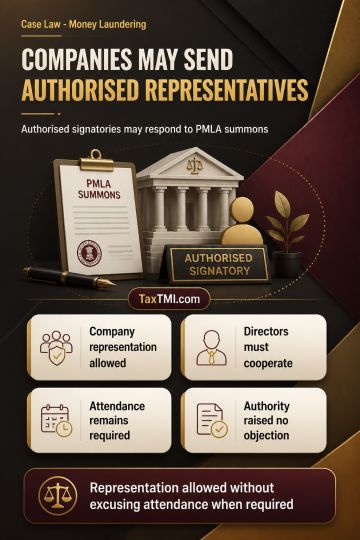
Corporate representation in PMLA summons proceedings permitted through an authorised signatory, subject to directors' continuing cooperation and atten...
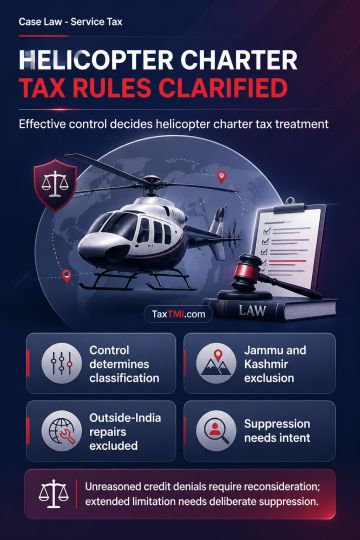
Helicopter charter classification requires effective control analysis, while territorial performance, reasoned credit orders and wilful suppression de...
ITAT held that depreciation on goodwill arising from amalgamation remained allowable where the claim concerned the same block of intangible asset already accepted in the foundational year, with no new goodwill or distinguishing change shown. It further held that reassessment was barred by limitation under the post-Ashish Agarwal and TOLA framework because the section 148 notice was issued beyond the surviving period, making the reassessment invalid. The Tribunal also affirmed that assessment framed in the name of a company which had already converted into an LLP was a nullity for want of jurisdiction. Finally, it upheld deletion of the section 14A disallowance because the Assessing Officer invoked Rule 8D without first recording the mandatory dissatisfaction under section 14A(2).
ITAT held that depreciation on goodwill arising from amalgamation remained allowable where the claim concerned the same block of intangible asset already accepted in the foundational year, with no new goodwill or distinguishing change shown. It further held that reassessment was barred by limitation under the post-Ashish Agarwal and TOLA framework because the section 148 notice was issued beyond the surviving period, making the reassessment invalid. The Tribunal also affirmed that assessment framed in the name of a company which had already converted into an LLP was a nullity for want of jurisdiction. Finally, it upheld deletion of the section 14A disallowance because the Assessing Officer invoked Rule 8D without first recording the mandatory dissatisfaction under section 14A(2).
Note: It is a system-generated summary and is for quick reference only.
 TaxTMI
  TaxTMI
 of 4828









 Join Channel