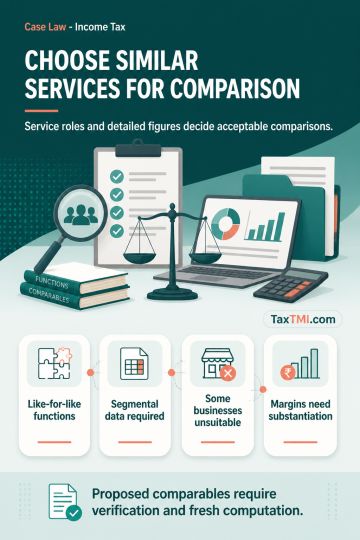
Functional comparability governs selection of support-service and IT-enabled service comparables, with verification required for unresolved data and m...
Bank account freezing requires statutory authority; anti-money-laundering compliance and KYC monitoring do not permit unilateral indefinite restrictio...
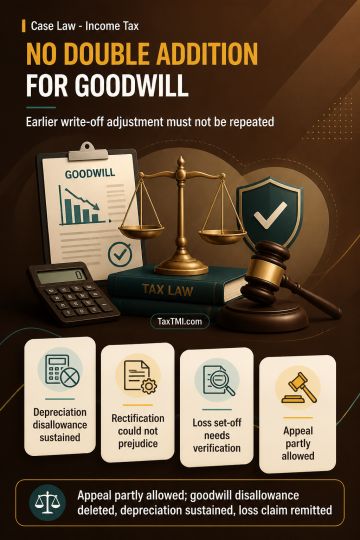
ITAT held that depreciation on goodwill arising from amalgamation remained allowable where the claim concerned the same block of intangible asset already accepted in the foundational year, with no new goodwill or distinguishing change shown. It further held that reassessment was barred by limitation under the post-Ashish Agarwal and TOLA framework because the section 148 notice was issued beyond the surviving period, making the reassessment invalid. The Tribunal also affirmed that assessment framed in the name of a company which had already converted into an LLP was a nullity for want of jurisdiction. Finally, it upheld deletion of the section 14A disallowance because the Assessing Officer invoked Rule 8D without first recording the mandatory dissatisfaction under section 14A(2).
ITAT held that depreciation on goodwill arising from amalgamation remained allowable where the claim concerned the same block of intangible asset already accepted in the foundational year, with no new goodwill or distinguishing change shown. It further held that reassessment was barred by limitation under the post-Ashish Agarwal and TOLA framework because the section 148 notice was issued beyond the surviving period, making the reassessment invalid. The Tribunal also affirmed that assessment framed in the name of a company which had already converted into an LLP was a nullity for want of jurisdiction. Finally, it upheld deletion of the section 14A disallowance because the Assessing Officer invoked Rule 8D without first recording the mandatory dissatisfaction under section 14A(2).
Note: It is a system-generated summary and is for quick reference only.
 TaxTMI
  TaxTMI
 of 4828











 Join Channel