Cooperative society deposits, member-interest TDS exemption and credit-facility deduction claims require verification through records and supporting e...
Customs jurisdiction over EPCG condition breaches survives export-obligation discharge certificates, requiring alleged fraud and misdeclaration to be ...
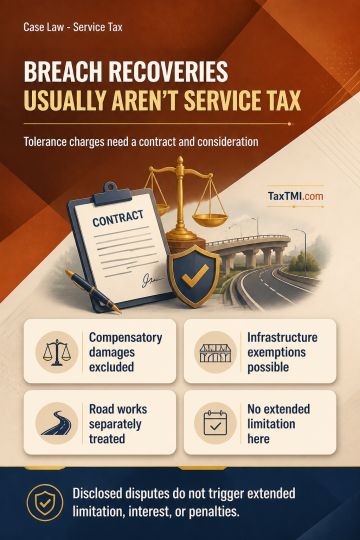
Contractual tolerance requires consideration; breach recoveries, qualifying public infrastructure services and road works escape service tax liability...
An unregistered assignment deed was treated as sufficient prima facie basis for substitution of the assignee in proceedings, because permitting the assignee to contest the matter was considered a collateral purpose distinct from determining the deed's validity or transfer effect. Relying on the principle that an unregistered document may be read for a collateral purpose, the Tribunal left all objections under Sections 17 and 49 of the Registration Act open for decision in the main company petition. The substitution of the assignee was therefore maintained, while the challenge to the assignment deed's admissibility, enforceability and legal effect was reserved for final adjudication.
An unregistered assignment deed was treated as sufficient prima facie basis for substitution of the assignee in proceedings, because permitting the assignee to contest the matter was considered a collateral purpose distinct from determining the deed's validity or transfer effect. Relying on the principle that an unregistered document may be read for a collateral purpose, the Tribunal left all objections under Sections 17 and 49 of the Registration Act open for decision in the main company petition. The substitution of the assignee was therefore maintained, while the challenge to the assignment deed's admissibility, enforceability and legal effect was reserved for final adjudication.
Note: It is a system-generated summary and is for quick reference only.
 TaxTMI
  TaxTMI
 of 4828












 Join Channel