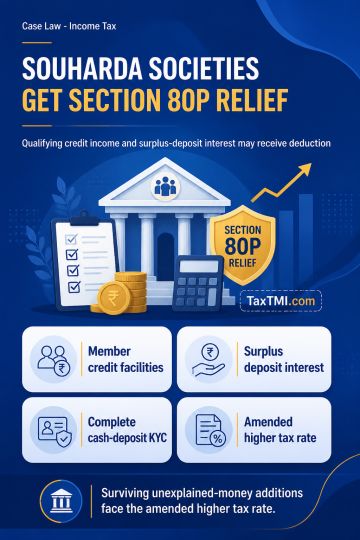
Section 80P deduction covers Souharda credit societies, including qualifying surplus-deposit interest, subject to member KYC verification for cash dep...
Transfer-pricing benchmarking and capital-receipt principles sustained taxpayer relief, while unsupported property-advance write-offs remained disallo...
Tax liability arising during CIRP was not extinguished by the approved resolution plan, because the plan showed awareness of pending tax compliances, the NCLT did not grant a blanket waiver of statutory dues, and reliefs were left to the appropriate forum. The Court held that the clean slate principle and the Supreme Court rulings in Essar Steel and Ghanashyam Mishra applied to pre-CIRP dues, not liabilities incurred during CIRP; the reassessment challenge therefore failed. On delayed return filing and carry forward of losses, the petitioner was required to seek condonation under the statutory mechanism, including CBDT action under section 119(2)(b), and could not obtain such relief in writ proceedings. The writ petition was dismissed.
Tax liability arising during CIRP was not extinguished by the approved resolution plan, because the plan showed awareness of pending tax compliances, the NCLT did not grant a blanket waiver of statutory dues, and reliefs were left to the appropriate forum. The Court held that the clean slate principle and the Supreme Court rulings in Essar Steel and Ghanashyam Mishra applied to pre-CIRP dues, not liabilities incurred during CIRP; the reassessment challenge therefore failed. On delayed return filing and carry forward of losses, the petitioner was required to seek condonation under the statutory mechanism, including CBDT action under section 119(2)(b), and could not obtain such relief in writ proceedings. The writ petition was dismissed.
Note: It is a system-generated summary and is for quick reference only.
 TaxTMI
  TaxTMI
 of 4828










 Join Channel