Specialized Investment Fund distribution now requires dedicated certification, while transitional recognition preserves existing qualified distributor...
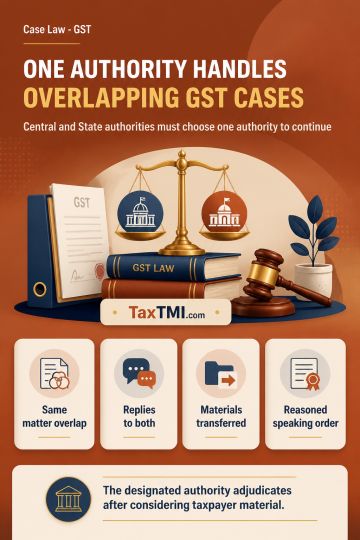
Overlapping GST proceedings require Central and State authorities to designate one competent authority for coordinated adjudication of the same matter...
Composite healthcare supplies retain exemption when patient care is the contract's essential character, despite payment through an implementing agency...
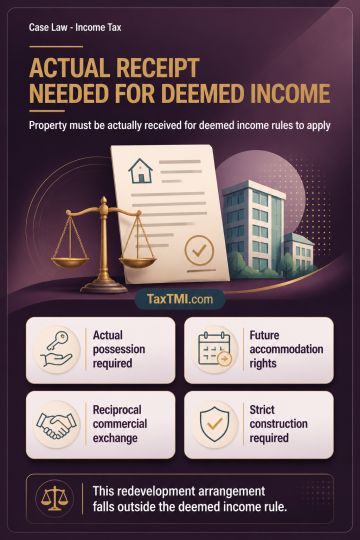
Receipt of immovable property requires actual possession or enjoyment; redevelopment allotments exchanged for tenancy rights fall outside deemed incom...
Page of 4828
Press 'Enter' after typing page number.
1481 to 1500 of 96556 Results
❮
❯
❯❯
0 / 200
Expand Note
Add to Folder
No Folders have been created
+
Are you sure you want to delete "My most important" ?
Tax liability arising during CIRP was not extinguished by the approved resolution plan, because the plan showed awareness of pending tax compliances, the NCLT did not grant a blanket waiver of statutory dues, and reliefs were left to the appropriate forum. The Court held that the clean slate principle and the Supreme Court rulings in Essar Steel and Ghanashyam Mishra applied to pre-CIRP dues, not liabilities incurred during CIRP; the reassessment challenge therefore failed. On delayed return filing and carry forward of losses, the petitioner was required to seek condonation under the statutory mechanism, including CBDT action under section 119(2)(b), and could not obtain such relief in writ proceedings. The writ petition was dismissed.
Tax liability arising during CIRP was not extinguished by the approved resolution plan, because the plan showed awareness of pending tax compliances, the NCLT did not grant a blanket waiver of statutory dues, and reliefs were left to the appropriate forum. The Court held that the clean slate principle and the Supreme Court rulings in Essar Steel and Ghanashyam Mishra applied to pre-CIRP dues, not liabilities incurred during CIRP; the reassessment challenge therefore failed. On delayed return filing and carry forward of losses, the petitioner was required to seek condonation under the statutory mechanism, including CBDT action under section 119(2)(b), and could not obtain such relief in writ proceedings. The writ petition was dismissed.
Note: It is a system-generated summary and is for quick reference only.
 TaxTMI
  TaxTMI
 of 4828

















 Join Channel