Tariff classification of vehicle gear components follows the specific gearing entry, displacing motor-vehicle parts classification and related liabili...
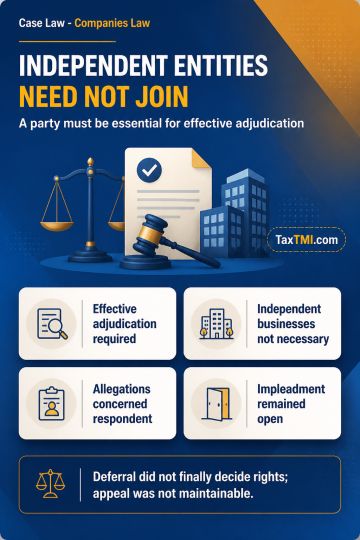
Necessary-party requirements limit impleadment of independent entities, while deferred consideration does not create an appealable adverse determinati...
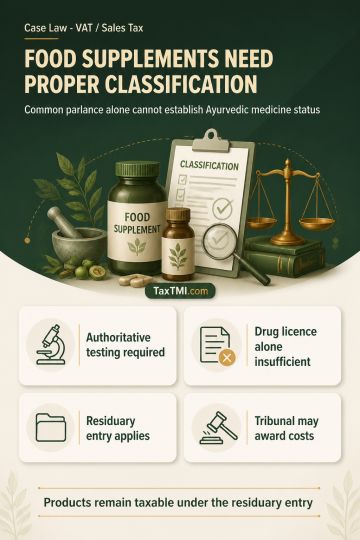
Food supplement classification requires common parlance and authoritative tests, preventing treatment as proprietary Ayurvedic medicines without suppo...
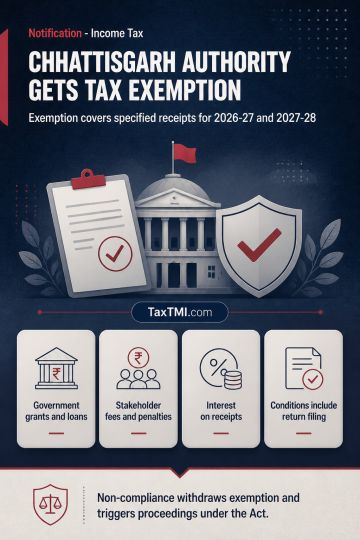
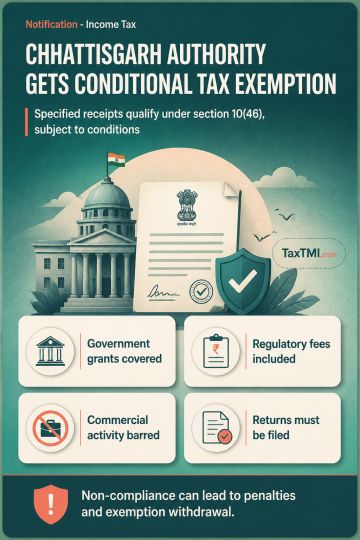
Specified regulatory authority income receives conditional tax exemption, subject to non-commercial activity, unchanged income character, and return f...
Tax exemption for regulatory authority income applies retrospectively, subject to non-commercial activity, unchanged income sources, and return-filing...
Tax liability arising during CIRP was not extinguished by the approved resolution plan, because the plan showed awareness of pending tax compliances, the NCLT did not grant a blanket waiver of statutory dues, and reliefs were left to the appropriate forum. The Court held that the clean slate principle and the Supreme Court rulings in Essar Steel and Ghanashyam Mishra applied to pre-CIRP dues, not liabilities incurred during CIRP; the reassessment challenge therefore failed. On delayed return filing and carry forward of losses, the petitioner was required to seek condonation under the statutory mechanism, including CBDT action under section 119(2)(b), and could not obtain such relief in writ proceedings. The writ petition was dismissed.
Tax liability arising during CIRP was not extinguished by the approved resolution plan, because the plan showed awareness of pending tax compliances, the NCLT did not grant a blanket waiver of statutory dues, and reliefs were left to the appropriate forum. The Court held that the clean slate principle and the Supreme Court rulings in Essar Steel and Ghanashyam Mishra applied to pre-CIRP dues, not liabilities incurred during CIRP; the reassessment challenge therefore failed. On delayed return filing and carry forward of losses, the petitioner was required to seek condonation under the statutory mechanism, including CBDT action under section 119(2)(b), and could not obtain such relief in writ proceedings. The writ petition was dismissed.
Note: It is a system-generated summary and is for quick reference only.
 TaxTMI
  TaxTMI
 of 4828










 Join Channel


