Specialized Investment Fund distribution now requires dedicated certification, while transitional recognition preserves existing qualified distributor...
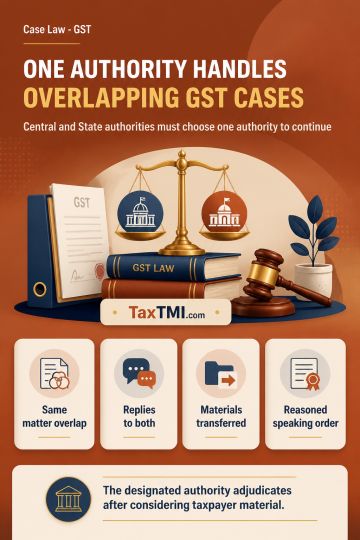
Overlapping GST proceedings require Central and State authorities to designate one competent authority for coordinated adjudication of the same matter...
Composite healthcare supplies retain exemption when patient care is the contract's essential character, despite payment through an implementing agency...
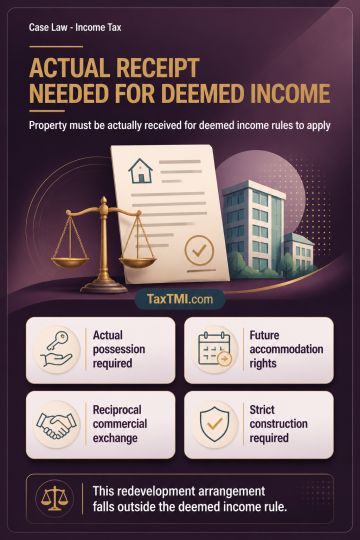
Receipt of immovable property requires actual possession or enjoyment; redevelopment allotments exchanged for tenancy rights fall outside deemed incom...
Page of 4828
Press 'Enter' after typing page number.
1481 to 1500 of 96556 Results
❮
❯
❯❯
0 / 200
Expand Note
Add to Folder
No Folders have been created
+
Are you sure you want to delete "My most important" ?
Inordinate delay in filing the first appeal was condoned because...
Liberal construction of sufficient cause justifies condonation of inordinate delay where criminal proceedings and jail confinement explained the default.
Contents
Summary
Note
Bookmark
Share
✓ Copied successfully !
Print
Print Options
For full text, please login
Login to TaxTMI
Verification Pending
The Email Id has not been verified. Click on the link we have sent on
Inordinate delay in filing the first appeal was condoned because the controlling test was the acceptability of the explanation, not the length of delay alone. Applying a liberal construction of "sufficient cause", the Tribunal accepted that multiple pending criminal proceedings and the assessee's confinement in jail were circumstances beyond his control. Refusal to condone would have shut out adjudication on merits, so the dismissal of the appeal on limitation was not sustained. The matter was restored to the CIT(A) for disposal on merits after giving the assessee a reasonable opportunity.
Inordinate delay in filing the first appeal was condoned because the controlling test was the acceptability of the explanation, not the length of delay alone. Applying a liberal construction of "sufficient cause", the Tribunal accepted that multiple pending criminal proceedings and the assessee's confinement in jail were circumstances beyond his control. Refusal to condone would have shut out adjudication on merits, so the dismissal of the appeal on limitation was not sustained. The matter was restored to the CIT(A) for disposal on merits after giving the assessee a reasonable opportunity.
Note: It is a system-generated summary and is for quick reference only.
 TaxTMI
  TaxTMI
 of 4828

















 Join Channel