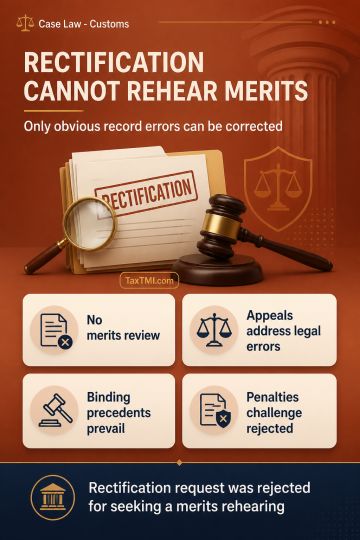
Rectification of mistake remains limited to self-evident record errors, preventing merits review through miscellaneous applications and preserving fin...
Tender creditworthiness conditions may extend to de facto Promoter Directors, with post-participation challenges generally barred absent arbitrariness...
Corporate representation in PMLA summons proceedings permitted through an authorised signatory, subject to directors' continuing cooperation and atten...
Helicopter charter classification requires effective control analysis, while territorial performance, reasoned credit orders and wilful suppression de...
Inordinate delay in filing the first appeal was condoned because...
Liberal construction of sufficient cause justifies condonation of inordinate delay where criminal proceedings and jail confinement explained the default.
Contents
Summary
Note
Bookmark
Share
✓ Copied successfully !
Print
Print Options
For full text, please login
Login to TaxTMI
Verification Pending
The Email Id has not been verified. Click on the link we have sent on
Inordinate delay in filing the first appeal was condoned because the controlling test was the acceptability of the explanation, not the length of delay alone. Applying a liberal construction of "sufficient cause", the Tribunal accepted that multiple pending criminal proceedings and the assessee's confinement in jail were circumstances beyond his control. Refusal to condone would have shut out adjudication on merits, so the dismissal of the appeal on limitation was not sustained. The matter was restored to the CIT(A) for disposal on merits after giving the assessee a reasonable opportunity.
Inordinate delay in filing the first appeal was condoned because the controlling test was the acceptability of the explanation, not the length of delay alone. Applying a liberal construction of "sufficient cause", the Tribunal accepted that multiple pending criminal proceedings and the assessee's confinement in jail were circumstances beyond his control. Refusal to condone would have shut out adjudication on merits, so the dismissal of the appeal on limitation was not sustained. The matter was restored to the CIT(A) for disposal on merits after giving the assessee a reasonable opportunity.
Note: It is a system-generated summary and is for quick reference only.
 TaxTMI
  TaxTMI
 of 4828


















 Join Channel