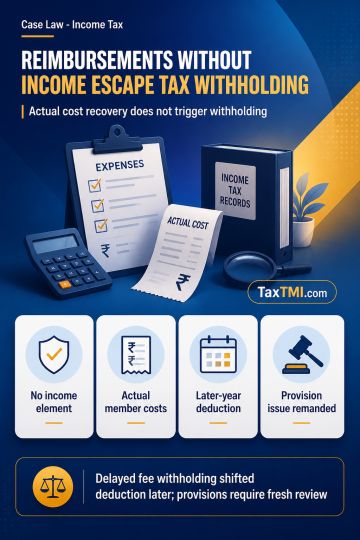
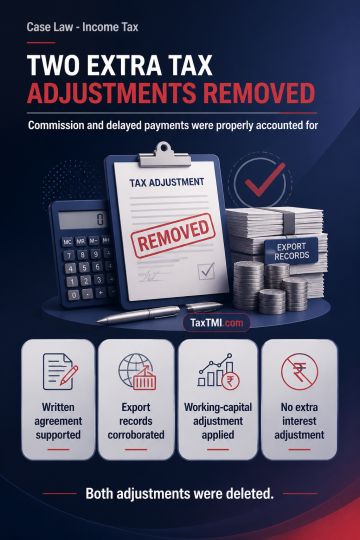
Pure reimbursement without income element escapes tax withholding, while delayed withholding and unsupported provisions face deferred or renewed scrut...
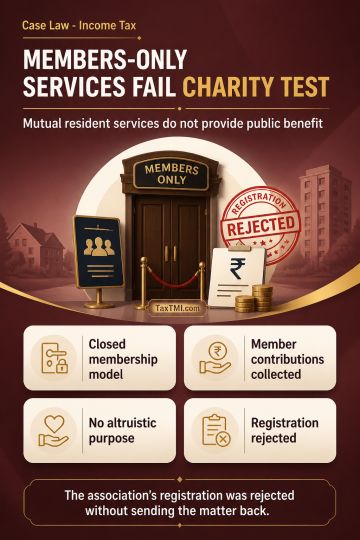
Public benefit requirement defeats charitable registration where residents' association services are reciprocal, member-only facilities governed by mu...
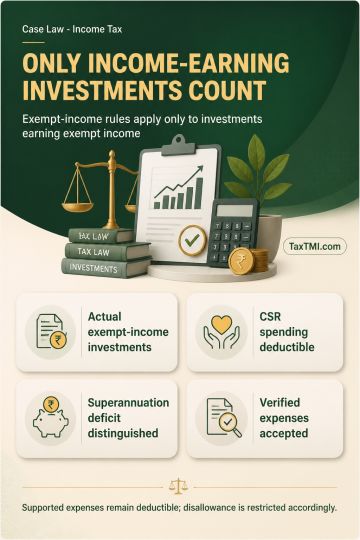
Exempt-income expenditure disallowance is confined to investments that actually generated exempt income, while supported business expenses remain dedu...
Objective characteristics and principal use govern mining-tyre classification, while fresh advance ruling applications may rely on additional technica...
An adjustment under section 143(1)(a) disallowing employees' provident fund contribution was impermissible because, on the date of intimation, the issue was debatable and governed by binding jurisdictional High Court precedent favouring the assessee. The Tribunal held that CPC must test the legality of a prima facie adjustment with reference to the law prevailing at that time, and a later Supreme Court ruling could not justify the adjustment retrospectively. Reliance on a non-jurisdictional High Court decision did not override the prevailing jurisdictional position. The disallowance was deleted and the assessee's claim was allowed.
An adjustment under section 143(1)(a) disallowing employees' provident fund contribution was impermissible because, on the date of intimation, the issue was debatable and governed by binding jurisdictional High Court precedent favouring the assessee. The Tribunal held that CPC must test the legality of a prima facie adjustment with reference to the law prevailing at that time, and a later Supreme Court ruling could not justify the adjustment retrospectively. Reliance on a non-jurisdictional High Court decision did not override the prevailing jurisdictional position. The disallowance was deleted and the assessee's claim was allowed.
Note: It is a system-generated summary and is for quick reference only.
 TaxTMI
  TaxTMI
 of 4830









 Join Channel


