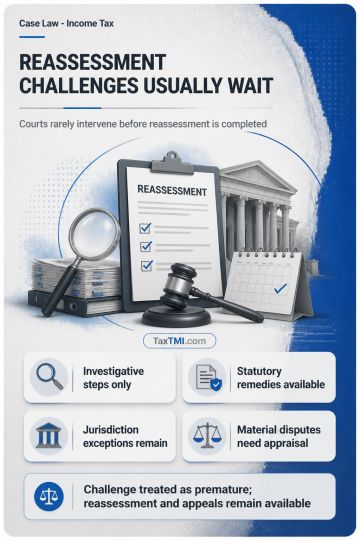
Preliminary reassessment proceedings generally require statutory remedies unless jurisdiction is wholly absent or mandatory conditions are patently br...
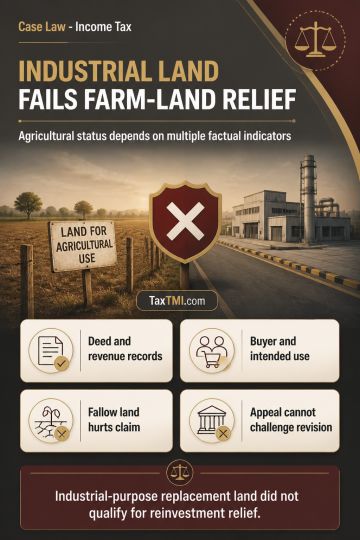
Agricultural land classification requires cumulative factual indicators, while industrial-purpose land and absent agricultural use defeat reinvestment...
Section 7 insolvency proceedings were held to be within limitation because the corporate debtor's liability was repeatedly acknowledged in balance sheets, one-time settlement proposals and an email communication, attracting Section 18 of the Limitation Act and extending time. The Tribunal also applied the principle that a recovery certificate can constitute a fresh cause of action for initiating insolvency proceedings, so the application could not be treated as time-barred. On substitution, it ruled that the deceased appellant's legal heir could continue the pending appeal, since substitution had already been permitted and the heir merely stepped into the appellant's shoes to preserve the existing proceedings. The limitation objection and the maintainability challenge were rejected.
Section 7 insolvency proceedings were held to be within limitation because the corporate debtor's liability was repeatedly acknowledged in balance sheets, one-time settlement proposals and an email communication, attracting Section 18 of the Limitation Act and extending time. The Tribunal also applied the principle that a recovery certificate can constitute a fresh cause of action for initiating insolvency proceedings, so the application could not be treated as time-barred. On substitution, it ruled that the deceased appellant's legal heir could continue the pending appeal, since substitution had already been permitted and the heir merely stepped into the appellant's shoes to preserve the existing proceedings. The limitation objection and the maintainability challenge were rejected.
Note: It is a system-generated summary and is for quick reference only.
 TaxTMI
  TaxTMI
 of 4828





 Join Channel


