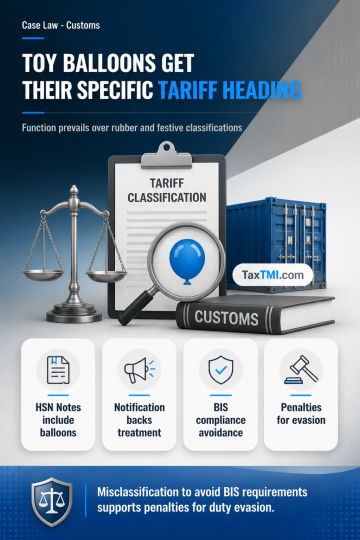
Toy balloon tariff classification: functional heading prevails over residual rubber and festive article headings, supporting penalties for deliberate ...
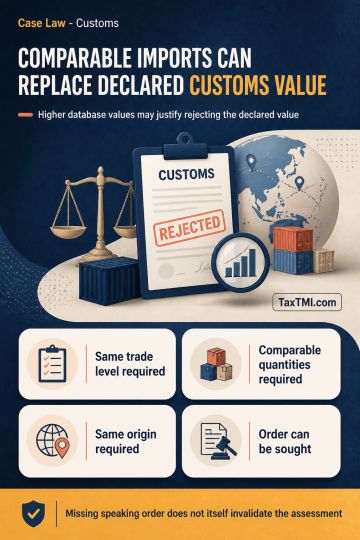
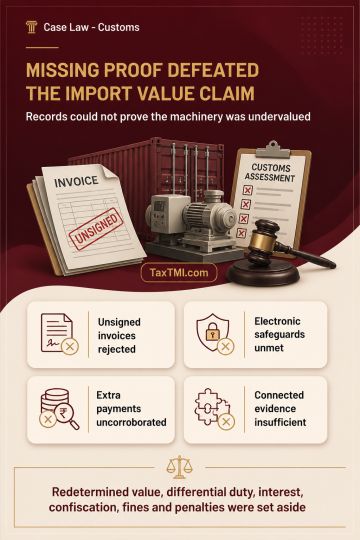
Customs valuation using comparable contemporaneous imports can displace declared value, while missing speaking orders require pursuit before competent...
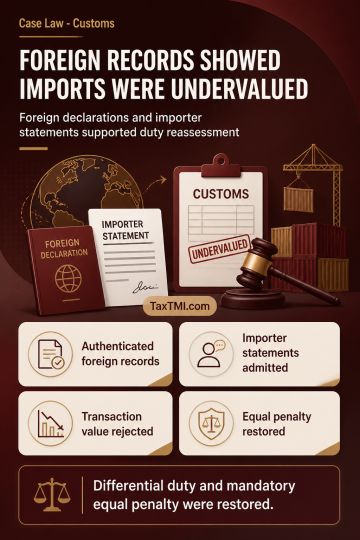
Foreign customs declarations and importer admissions established undervaluation, supporting sequential value redetermination, differential duty, and m...
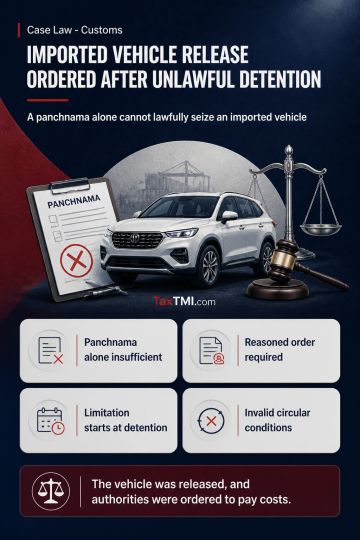
Customs seizure safeguards prevent detention-based limitation avoidance and invalidate provisional release conditions for imported vehicles under an i...
Page of 4828
Press 'Enter' after typing page number.
361 to 380 of 96556 Results
❮
❯
❯❯
0 / 200
Expand Note
Add to Folder
No Folders have been created
+
Are you sure you want to delete "My most important" ?
Section 7 insolvency proceedings were held to be within limitation because the corporate debtor's liability was repeatedly acknowledged in balance sheets, one-time settlement proposals and an email communication, attracting Section 18 of the Limitation Act and extending time. The Tribunal also applied the principle that a recovery certificate can constitute a fresh cause of action for initiating insolvency proceedings, so the application could not be treated as time-barred. On substitution, it ruled that the deceased appellant's legal heir could continue the pending appeal, since substitution had already been permitted and the heir merely stepped into the appellant's shoes to preserve the existing proceedings. The limitation objection and the maintainability challenge were rejected.
Section 7 insolvency proceedings were held to be within limitation because the corporate debtor's liability was repeatedly acknowledged in balance sheets, one-time settlement proposals and an email communication, attracting Section 18 of the Limitation Act and extending time. The Tribunal also applied the principle that a recovery certificate can constitute a fresh cause of action for initiating insolvency proceedings, so the application could not be treated as time-barred. On substitution, it ruled that the deceased appellant's legal heir could continue the pending appeal, since substitution had already been permitted and the heir merely stepped into the appellant's shoes to preserve the existing proceedings. The limitation objection and the maintainability challenge were rejected.
Note: It is a system-generated summary and is for quick reference only.
 TaxTMI
  TaxTMI
 of 4828




 Join Channel