Commercial vehicle depreciation, scientifically determined warranty provisions and exempt-income disallowances were resolved in favour of the taxpayer...
Inherited property sale proceeds require capital-gains treatment where ownership is supported by evidence, not suspicion or unverified signature doubt...
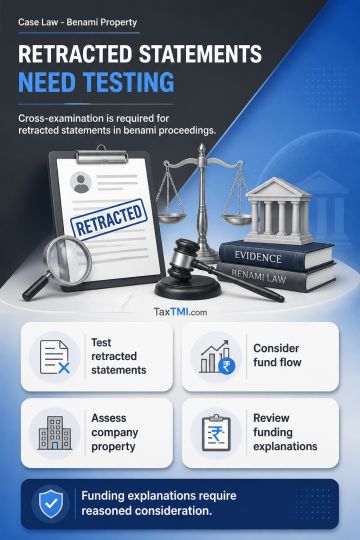
Cross-examination of retracted statements is essential where foundational evidence supports a benami allegation and documented funding explanations re...
The Company Court's jurisdiction was treated as surviving after a winding-up order, because post-winding-up arrangements that displaced the Official Liquidator's control could still be examined and, if necessary, undone under the court's inherent powers and the Companies Act, 1956. The challenge based on delay was not held to be fatal at this stage, as the alleged fraud and continuing acts were treated prima facie as giving rise to a continuing cause of action, leaving limitation for final determination. Ad interim stay was refused on balance of convenience, absence of a meaningful change in circumstances, and judicial propriety.
The Company Court's jurisdiction was treated as surviving after a winding-up order, because post-winding-up arrangements that displaced the Official Liquidator's control could still be examined and, if necessary, undone under the court's inherent powers and the Companies Act, 1956. The challenge based on delay was not held to be fatal at this stage, as the alleged fraud and continuing acts were treated prima facie as giving rise to a continuing cause of action, leaving limitation for final determination. Ad interim stay was refused on balance of convenience, absence of a meaningful change in circumstances, and judicial propriety.
Note: It is a system-generated summary and is for quick reference only.
 TaxTMI
 of 4788



















 Join Channel


 TaxTMI
