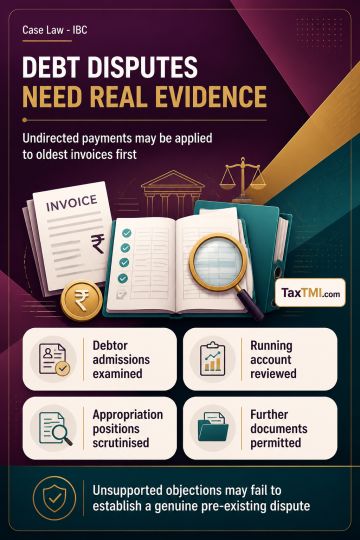
Pre-existing operational debt disputes require genuine evidence, while undirected running-account payments may be appropriated on a first-in-first-out...
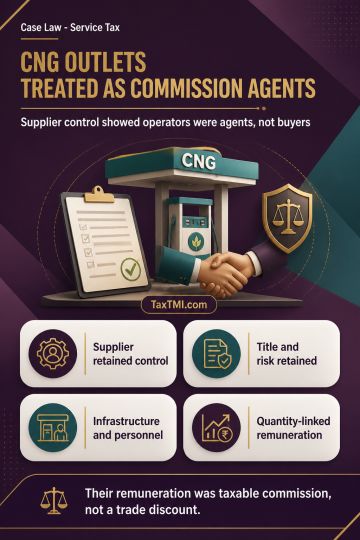
Agency in CNG distribution makes outlet operators commission agents, rendering taxable Business Auxiliary Service rather than purchasing goods for res...
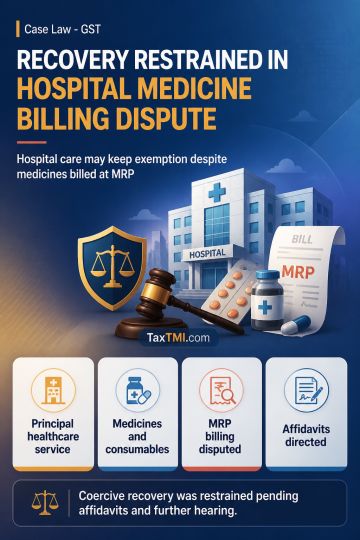
Composite inpatient healthcare supply may retain exemption despite MRP medicine billing, while separate taxable sale characterisation remains disputed...
Section 10A exclusion under the Insolvency and Bankruptcy Code must be computed with the correct contractual credit period, and invoices cannot be mechanically placed in the excluded period without reference to the supply terms. The tribunal found that goods from the Indian warehouse carried a 40-day credit period, so the remaining operational debt still crossed the Section 9 threshold. It also held that a later tripartite arrangement, executed after default, did not establish any pre-existing dispute, and that a mismatch between the demand notice and the insolvency claim was explained by post-notice part-payments and contractual interest. The rejection of the Section 9 application was set aside.
Section 10A exclusion under the Insolvency and Bankruptcy Code must be computed with the correct contractual credit period, and invoices cannot be mechanically placed in the excluded period without reference to the supply terms. The tribunal found that goods from the Indian warehouse carried a 40-day credit period, so the remaining operational debt still crossed the Section 9 threshold. It also held that a later tripartite arrangement, executed after default, did not establish any pre-existing dispute, and that a mismatch between the demand notice and the insolvency claim was explained by post-notice part-payments and contractual interest. The rejection of the Section 9 application was set aside.
Note: It is a system-generated summary and is for quick reference only.
 TaxTMI
 of 4800







 Join Channel


 TaxTMI
