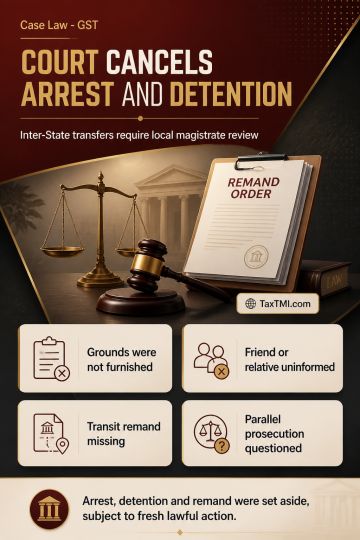
Arrest safeguards and transit remand requirements invalidated detention following inter-State transfer without communicated grounds or magistrate auth...
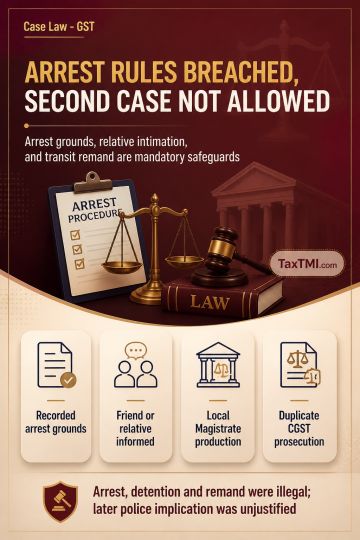
Arrest safeguards require disclosed grounds, relative intimation and transit remand, while duplicate prosecution under the CGST framework is unsustain...
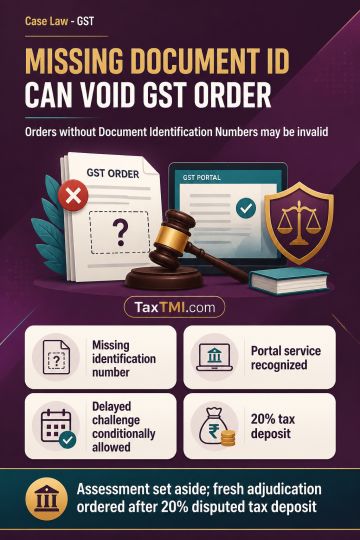
Document Identification Number defects can invalidate GST assessments, with delayed challenges entertained conditionally where patent irregularities e...
Windmill commissioning evidence supported higher depreciation where grid connection and electricity generation proved operational use before the relev...
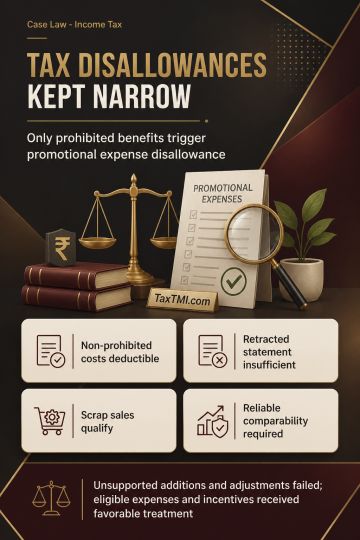
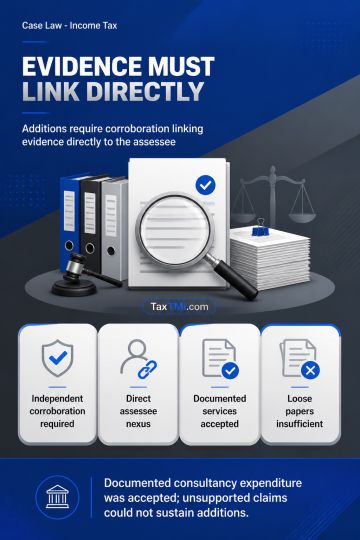
Pharmaceutical promotion and transfer-pricing comparability principles limited disallowances, while uncorroborated search allegations and unsupported ...
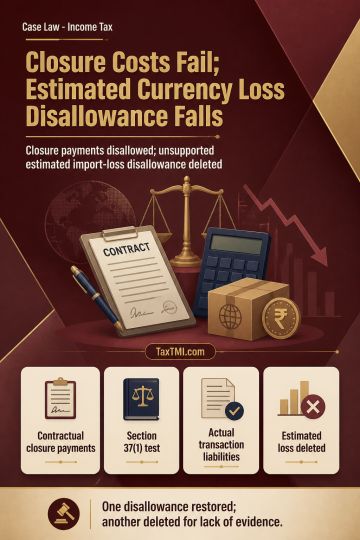
Business expenditure substantiation supports scrap credits, statutory payments and expense claims, while depreciation requires proof of actual busines...
Section 10A exclusion under the Insolvency and Bankruptcy Code must be computed with the correct contractual credit period, and invoices cannot be mechanically placed in the excluded period without reference to the supply terms. The tribunal found that goods from the Indian warehouse carried a 40-day credit period, so the remaining operational debt still crossed the Section 9 threshold. It also held that a later tripartite arrangement, executed after default, did not establish any pre-existing dispute, and that a mismatch between the demand notice and the insolvency claim was explained by post-notice part-payments and contractual interest. The rejection of the Section 9 application was set aside.
Section 10A exclusion under the Insolvency and Bankruptcy Code must be computed with the correct contractual credit period, and invoices cannot be mechanically placed in the excluded period without reference to the supply terms. The tribunal found that goods from the Indian warehouse carried a 40-day credit period, so the remaining operational debt still crossed the Section 9 threshold. It also held that a later tripartite arrangement, executed after default, did not establish any pre-existing dispute, and that a mismatch between the demand notice and the insolvency claim was explained by post-notice part-payments and contractual interest. The rejection of the Section 9 application was set aside.
Note: It is a system-generated summary and is for quick reference only.
 TaxTMI
 of 4792






 Join Channel


 TaxTMI