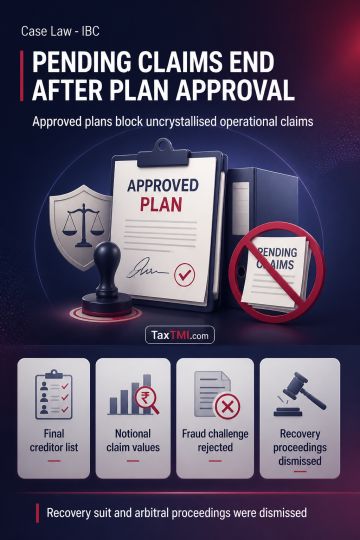
Clean slate principle extinguishes uncrystallised operational claims and bars continuation of pending recovery and arbitral proceedings after plan app...
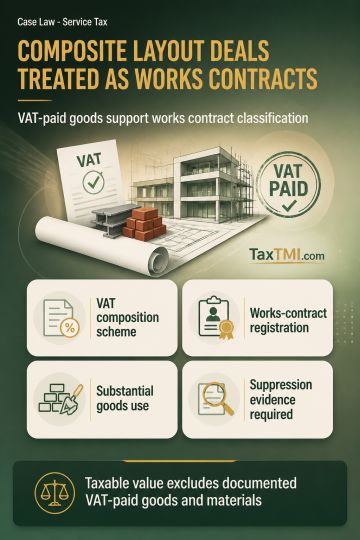
Works contract classification governs composite layout-development contracts where VAT-paid goods are transferred alongside construction and infrastru...
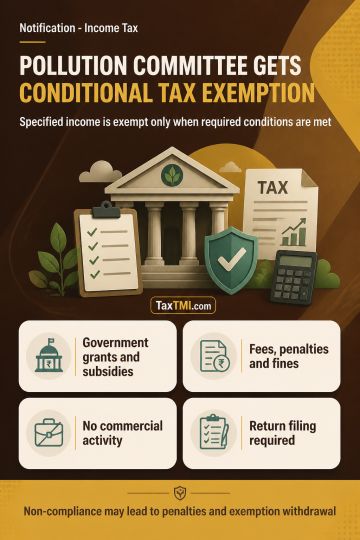
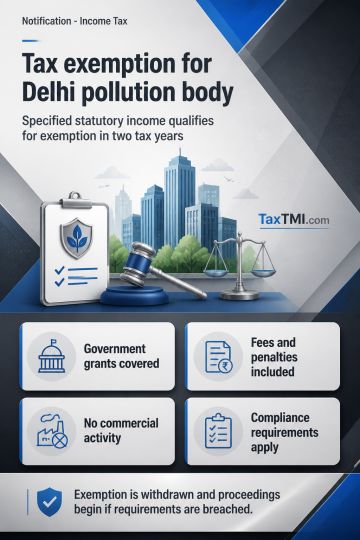
Specified income tax exemption for pollution control body remains conditional on non-commercial activity, unchanged income character, and return filin...
A High Court decision on tax litigation reiterated that condonation of delay depends only on sufficient cause, and prolonged administrative inaction, unexplained gaps and file movement without justification do not warrant indulgence; the State is held to the same diligence standard as any litigant. It also reaffirmed that review jurisdiction is narrow and cannot be used for rehearing unless there is an apparent error or comparable ground. On the tax issue, the Court applied strict construction of the notification and held that denatured spirit is distinct from ethyl alcohol; because the 30.03.2002 notification covered only rectified spirit, neutral spirit and ethyl alcohol, it did not impose entry tax on denatured spirit.
A High Court decision on tax litigation reiterated that condonation of delay depends only on sufficient cause, and prolonged administrative inaction, unexplained gaps and file movement without justification do not warrant indulgence; the State is held to the same diligence standard as any litigant. It also reaffirmed that review jurisdiction is narrow and cannot be used for rehearing unless there is an apparent error or comparable ground. On the tax issue, the Court applied strict construction of the notification and held that denatured spirit is distinct from ethyl alcohol; because the 30.03.2002 notification covered only rectified spirit, neutral spirit and ethyl alcohol, it did not impose entry tax on denatured spirit.
Note: It is a system-generated summary and is for quick reference only.
 TaxTMI
 of 4801






 Join Channel


 TaxTMI