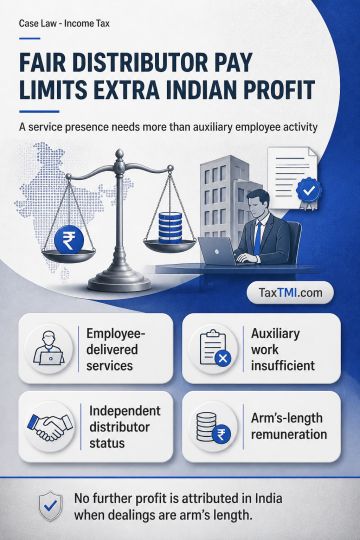
Service permanent establishment requires non-auxiliary services, while arm's-length distributor remuneration precludes further profit attribution in I...
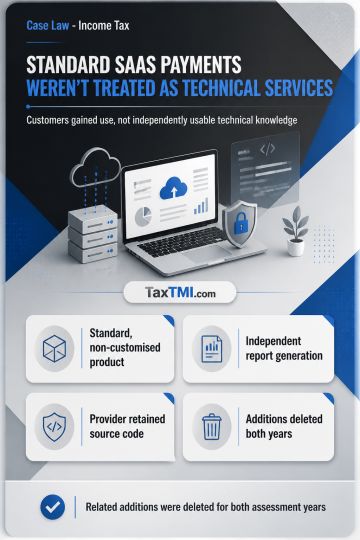
Make-available condition excludes standard SaaS subscription receipts where customers receive no independently usable technical knowledge after subscr...
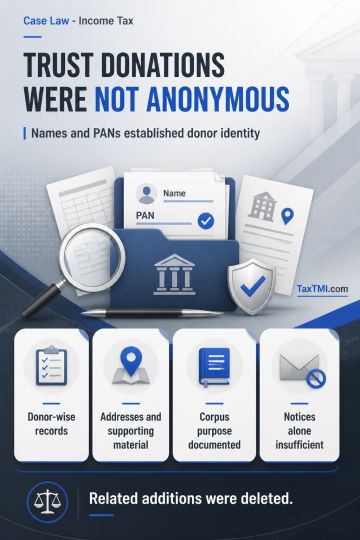
Anonymous donation classification fails where charitable trusts maintain undisputed donor identity records and evidence corpus contributions' intended...
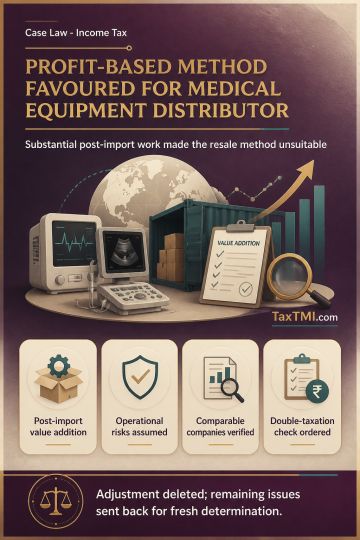
Transfer pricing method selection favours TNMM where medical-equipment distribution involves substantial post-import value addition and operational ri...
Page of 4809
Press 'Enter' after typing page number.
221 to 240 of 96174 Results
❮
❯
❯❯
0 / 200
Expand Note
Add to Folder
No Folders have been created
+
Are you sure you want to delete "My most important" ?
Naphtha procured under exemption notifications for use in the manufacture of fertilizer or ammonia qualified for concessional or nil duty when the goods were intended for that use, even if a portion of the input was diverted to electricity generation that also supported the fertiliser plant. The Court held that the notifications required proof of intended use, not exclusive actual end-use in every downstream stage, so the duty demand on alleged non-eligible use failed. On limitation, extended period invocation required deliberate suppression, fraud, collusion, wilful misstatement, or contravention with intent to evade duty; those elements were absent, the matter was interpretational, and the dispute was revenue neutral. The demand and penalty were therefore time-barred.
Naphtha procured under exemption notifications for use in the manufacture of fertilizer or ammonia qualified for concessional or nil duty when the goods were intended for that use, even if a portion of the input was diverted to electricity generation that also supported the fertiliser plant. The Court held that the notifications required proof of intended use, not exclusive actual end-use in every downstream stage, so the duty demand on alleged non-eligible use failed. On limitation, extended period invocation required deliberate suppression, fraud, collusion, wilful misstatement, or contravention with intent to evade duty; those elements were absent, the matter was interpretational, and the dispute was revenue neutral. The demand and penalty were therefore time-barred.
Note: It is a system-generated summary and is for quick reference only.
 TaxTMI
  TaxTMI
 of 4809




 Join Channel