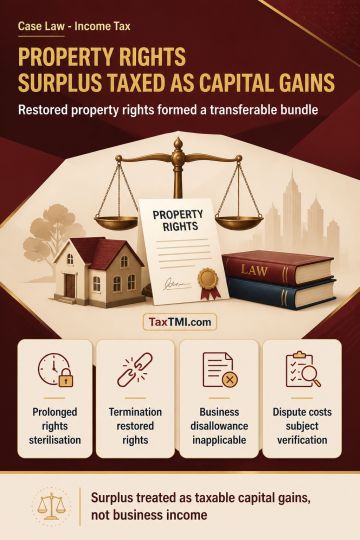
Prolonged sterilisation of development rights supports capital-gains treatment, while business-income disallowances cannot govern capital-gains comput...
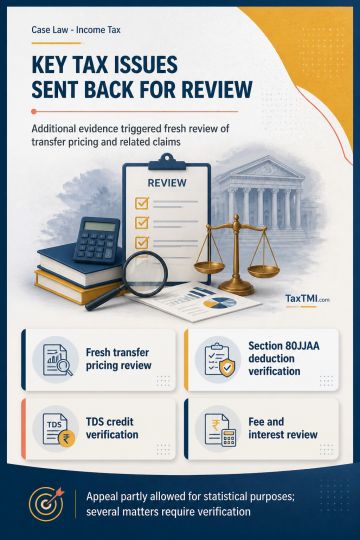
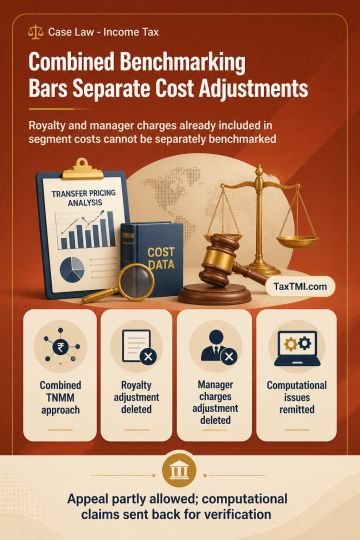
Additional evidence in transfer pricing dispute leads to fresh examination, while tax deductions, TDS credit, fee and refund interest require verifica...
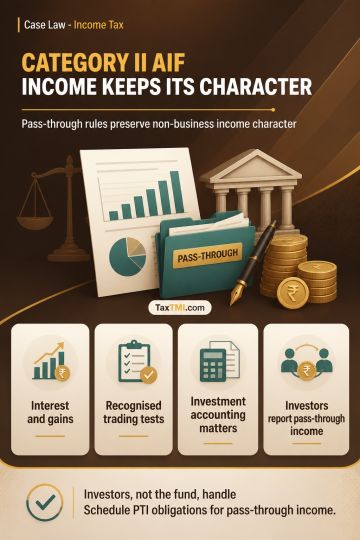
Category II AIF pass-through taxation preserves non-business income character; investment receipts cannot be reclassified without applying recognised ...
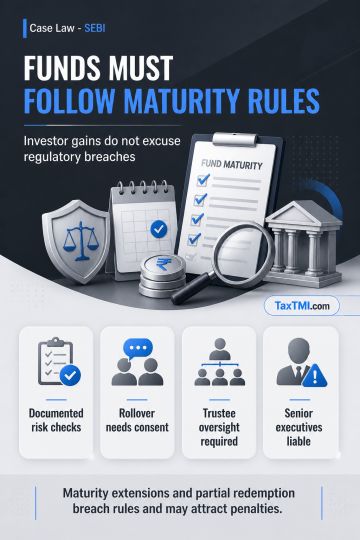
Mutual fund maturity rules require proper rollover, redemption, disclosure, and due diligence; investor gains cannot excuse regulatory breaches or pen...
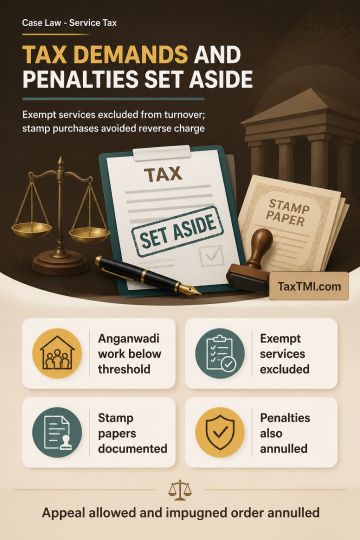
Threshold exemption excludes exempt services, while stamp-paper purchases avoid reverse charge; consequential service tax penalties were also set asid...
Transmission shafts, gears, gear boxes and allied machine parts manufactured for agricultural machinery were classifiable under Heading 8483, because Note 2(a) to Section XVI required goods specifically covered by a Chapter 84 heading to be classified there even if they were designed for a particular machine. The Tribunal also accepted that amounts reversed under Rule 6(3) on a bona fide exemption belief had to be adjusted against any duty liability, and cum-duty benefit was admissible where no duty was separately collected. The demand, however, was held time-barred: the dispute turned on tariff interpretation, suppression with intent to evade was not proved, and the extended period could not be invoked.
Transmission shafts, gears, gear boxes and allied machine parts manufactured for agricultural machinery were classifiable under Heading 8483, because Note 2(a) to Section XVI required goods specifically covered by a Chapter 84 heading to be classified there even if they were designed for a particular machine. The Tribunal also accepted that amounts reversed under Rule 6(3) on a bona fide exemption belief had to be adjusted against any duty liability, and cum-duty benefit was admissible where no duty was separately collected. The demand, however, was held time-barred: the dispute turned on tariff interpretation, suppression with intent to evade was not proved, and the extended period could not be invoked.
Note: It is a system-generated summary and is for quick reference only.
 TaxTMI
  TaxTMI
 of 4817







 Join Channel


