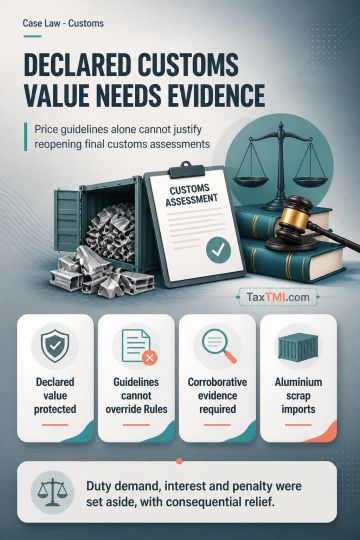
Transaction value cannot be rejected solely on non-statutory valuation guidelines without corroborative evidence supporting reassessment of final cust...
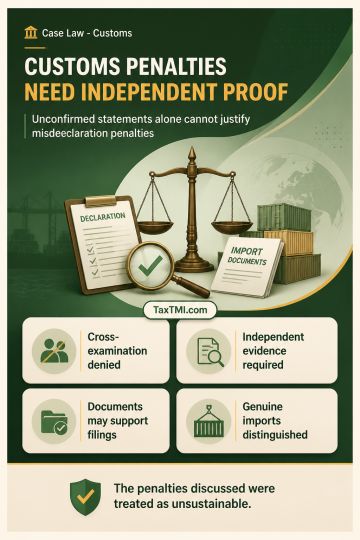
Cross-examination rights and corroborated evidence limit customs penalties for misdeclaration in genuine import transactions involving documented clea...
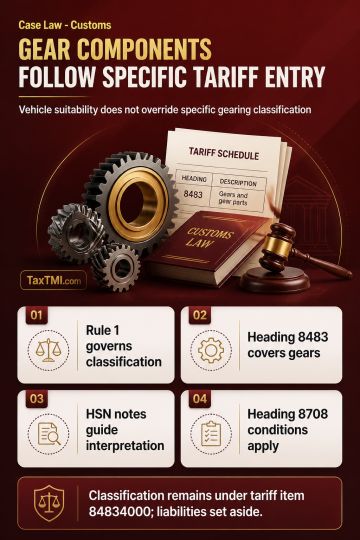
Tariff classification of vehicle gear components follows the specific gearing entry, displacing motor-vehicle parts classification and related liabili...
Necessary-party requirements limit impleadment of independent entities, while deferred consideration does not create an appealable adverse determinati...
Food supplement classification requires common parlance and authoritative tests, preventing treatment as proprietary Ayurvedic medicines without suppo...
Transmission shafts, gears, gear boxes and allied machine parts manufactured for agricultural machinery were classifiable under Heading 8483, because Note 2(a) to Section XVI required goods specifically covered by a Chapter 84 heading to be classified there even if they were designed for a particular machine. The Tribunal also accepted that amounts reversed under Rule 6(3) on a bona fide exemption belief had to be adjusted against any duty liability, and cum-duty benefit was admissible where no duty was separately collected. The demand, however, was held time-barred: the dispute turned on tariff interpretation, suppression with intent to evade was not proved, and the extended period could not be invoked.
Transmission shafts, gears, gear boxes and allied machine parts manufactured for agricultural machinery were classifiable under Heading 8483, because Note 2(a) to Section XVI required goods specifically covered by a Chapter 84 heading to be classified there even if they were designed for a particular machine. The Tribunal also accepted that amounts reversed under Rule 6(3) on a bona fide exemption belief had to be adjusted against any duty liability, and cum-duty benefit was admissible where no duty was separately collected. The demand, however, was held time-barred: the dispute turned on tariff interpretation, suppression with intent to evade was not proved, and the extended period could not be invoked.
Note: It is a system-generated summary and is for quick reference only.
 TaxTMI
  TaxTMI
 of 4814













 Join Channel




