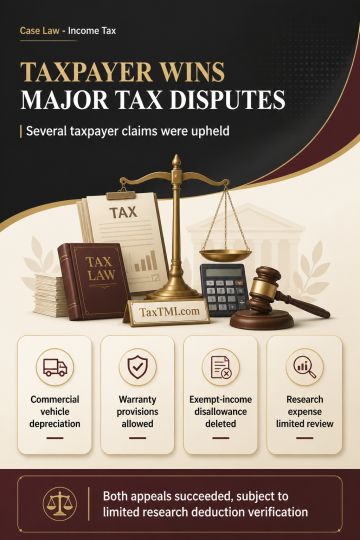
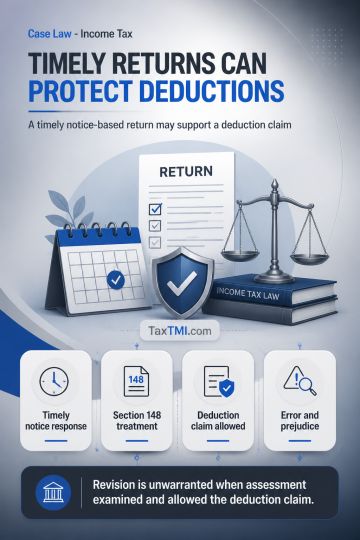
Commercial vehicle depreciation, scientifically determined warranty provisions and exempt-income disallowances were resolved in favour of the taxpayer...
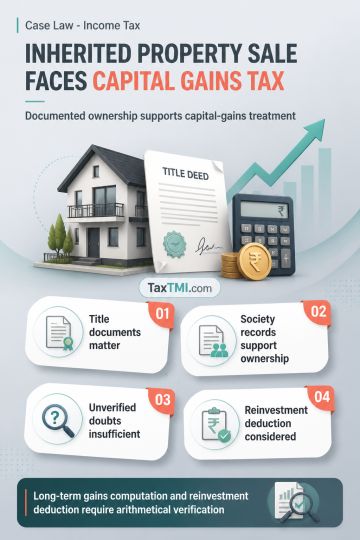
Inherited property sale proceeds require capital-gains treatment where ownership is supported by evidence, not suspicion or unverified signature doubt...
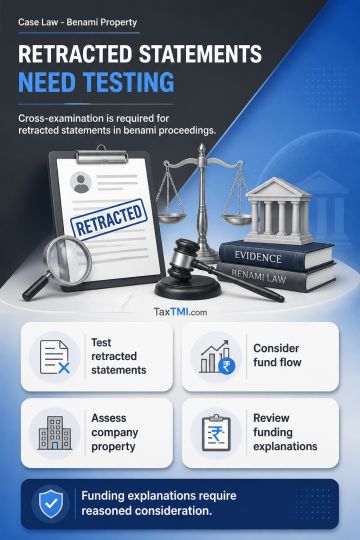
Cross-examination of retracted statements is essential where foundational evidence supports a benami allegation and documented funding explanations re...
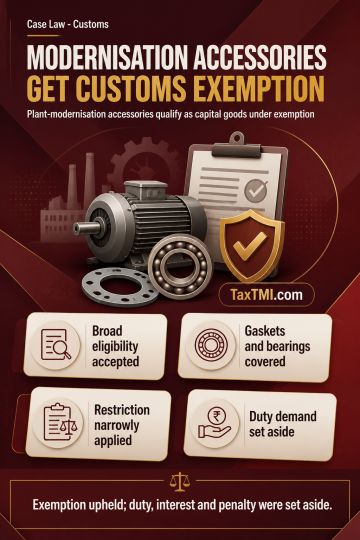
Capital-goods exemption covers plant-modernisation accessories, while the import restriction applies only to earlier capital-goods components and spar...
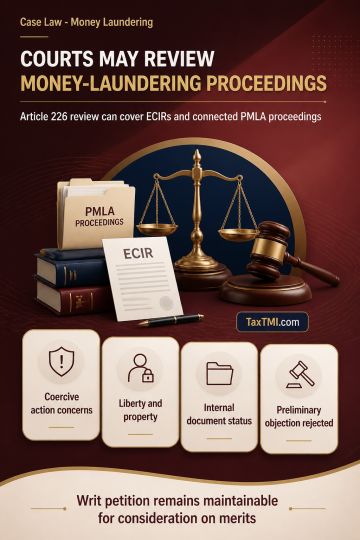
Constitutional judicial review permits challenges to ECIRs and connected money-laundering proceedings where coercive action affects fundamental intere...
Transmission shafts, gears, gear boxes and allied machine parts manufactured for agricultural machinery were classifiable under Heading 8483, because Note 2(a) to Section XVI required goods specifically covered by a Chapter 84 heading to be classified there even if they were designed for a particular machine. The Tribunal also accepted that amounts reversed under Rule 6(3) on a bona fide exemption belief had to be adjusted against any duty liability, and cum-duty benefit was admissible where no duty was separately collected. The demand, however, was held time-barred: the dispute turned on tariff interpretation, suppression with intent to evade was not proved, and the extended period could not be invoked.
Transmission shafts, gears, gear boxes and allied machine parts manufactured for agricultural machinery were classifiable under Heading 8483, because Note 2(a) to Section XVI required goods specifically covered by a Chapter 84 heading to be classified there even if they were designed for a particular machine. The Tribunal also accepted that amounts reversed under Rule 6(3) on a bona fide exemption belief had to be adjusted against any duty liability, and cum-duty benefit was admissible where no duty was separately collected. The demand, however, was held time-barred: the dispute turned on tariff interpretation, suppression with intent to evade was not proved, and the extended period could not be invoked.
Note: It is a system-generated summary and is for quick reference only.
 TaxTMI
  TaxTMI
 of 4809





 Join Channel


