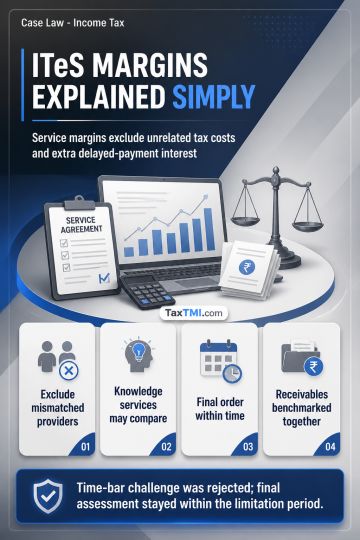
Transfer-pricing treatment of ITeS margins excludes pass-through tax recoveries and separate delayed-receivables interest after working-capital adjust...
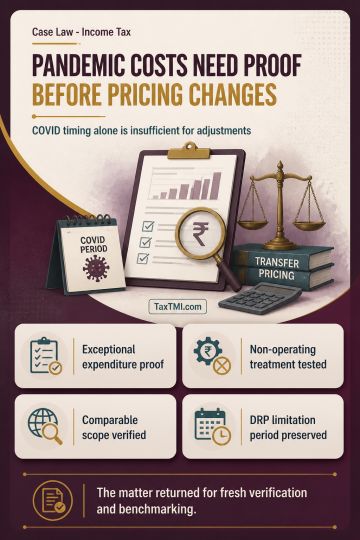
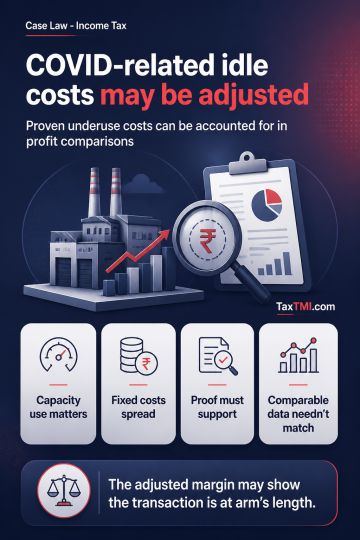
Capacity-utilisation adjustments under TNMM can neutralise substantiated COVID-related idle costs where underutilisation materially affects profitabil...
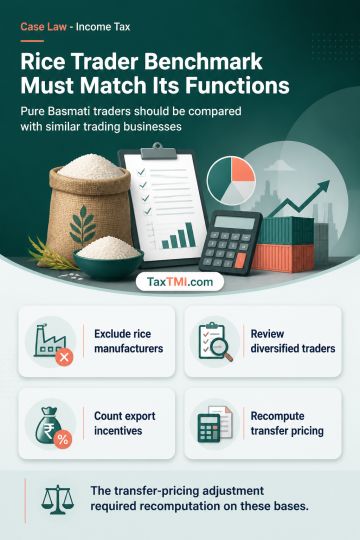
TNMM functional comparability requires excluding rice manufacturers from a pure Basmati rice trader's benchmark and recognising operating export recei...
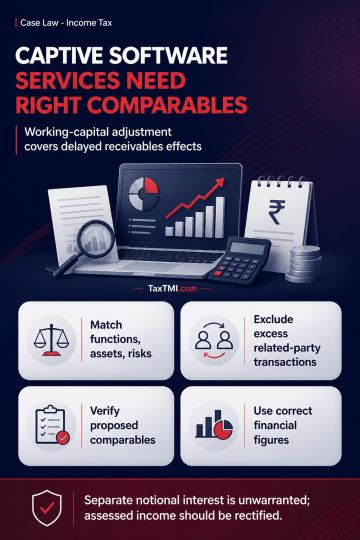
Working-capital adjustment subsumes delayed-receivable effects in TNMM benchmarking of captive software-development services, avoiding separate notion...
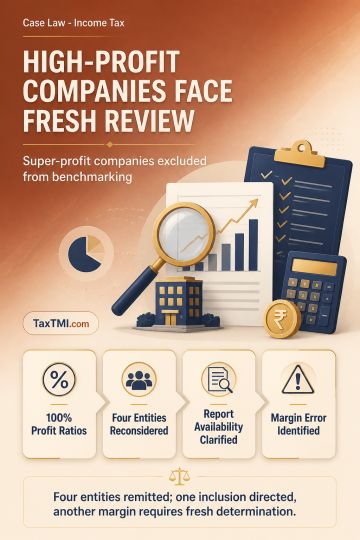
Transfer-pricing comparability requires exclusion of financially illogical super-profit comparables and correction of unsupported annual-report and ma...
Charitable character assessment preserves Section 80G approval despite inclusive spiritual teachings and incidental religious expenditure within the s...
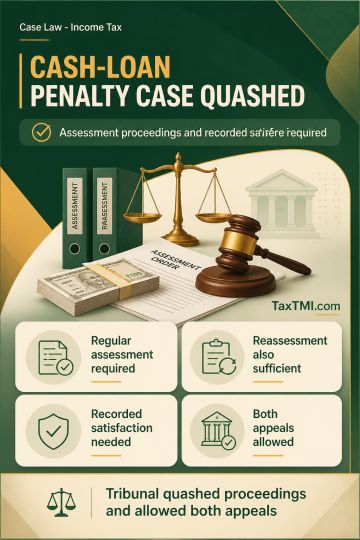
Penalty proceedings for cash-loan acceptance require assessment proceedings and recorded Assessing Officer satisfaction; absent these, the proceedings...
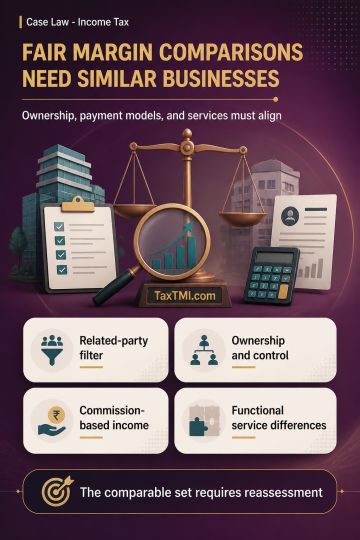
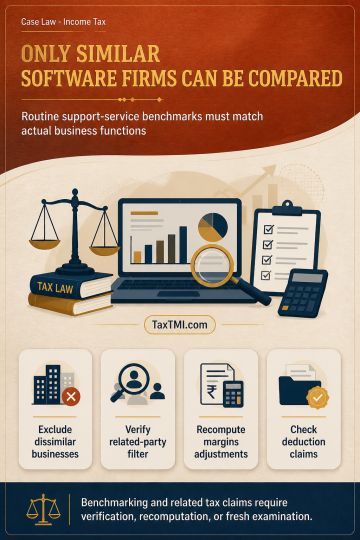
Functional comparability governs software-service benchmarking: dissimilar companies are excluded, while related-party filters, margins and working-ca...
Imported bearing assemblies used solely as automotive components were held classifiable under CTH 87087000 as parts of motor vehicles, because the exclusionary notes in Sections XVI and XVII did not resolve the tariff conflict and Note 3 to Section XVII required application of the sole or principal use test. The goods were not treated as bearings simpliciter, but as ready-to-fit assemblies for car wheels and rear drum assemblies. The Tribunal also held that the dispute was interpretational in nature, so penalties were not warranted; the penalties in two appeals were set aside. The challenge that the lower appellate authority had travelled beyond the show cause notices was rejected.
Imported bearing assemblies used solely as automotive components were held classifiable under CTH 87087000 as parts of motor vehicles, because the exclusionary notes in Sections XVI and XVII did not resolve the tariff conflict and Note 3 to Section XVII required application of the sole or principal use test. The goods were not treated as bearings simpliciter, but as ready-to-fit assemblies for car wheels and rear drum assemblies. The Tribunal also held that the dispute was interpretational in nature, so penalties were not warranted; the penalties in two appeals were set aside. The challenge that the lower appellate authority had travelled beyond the show cause notices was rejected.
Note: It is a system-generated summary and is for quick reference only.
 TaxTMI
  TaxTMI
 of 4826





 Join Channel


