Prolonged sterilisation of development rights supports capital-gains treatment, while business-income disallowances cannot govern capital-gains comput...
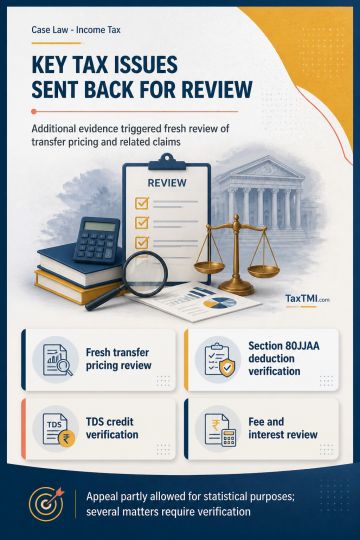
Additional evidence in transfer pricing dispute leads to fresh examination, while tax deductions, TDS credit, fee and refund interest require verifica...
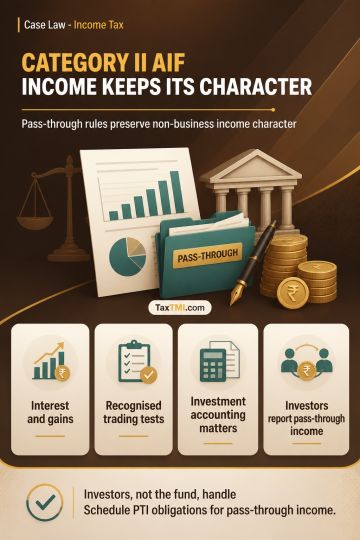
Category II AIF pass-through taxation preserves non-business income character; investment receipts cannot be reclassified without applying recognised ...
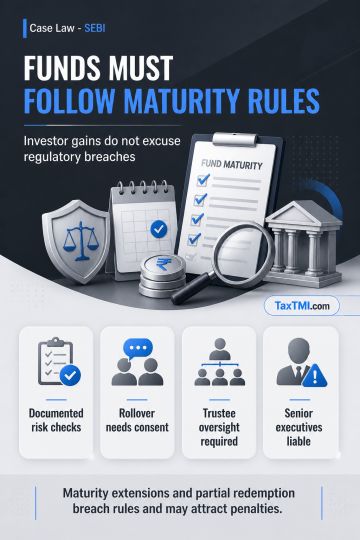
Mutual fund maturity rules require proper rollover, redemption, disclosure, and due diligence; investor gains cannot excuse regulatory breaches or pen...
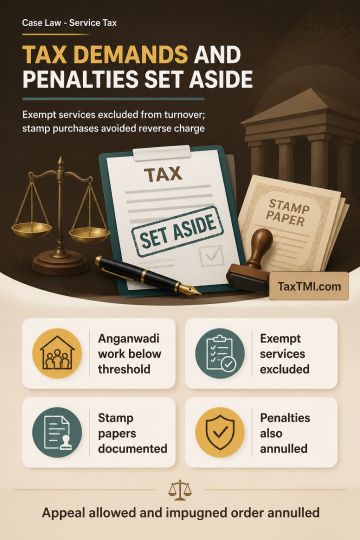
Threshold exemption excludes exempt services, while stamp-paper purchases avoid reverse charge; consequential service tax penalties were also set asid...
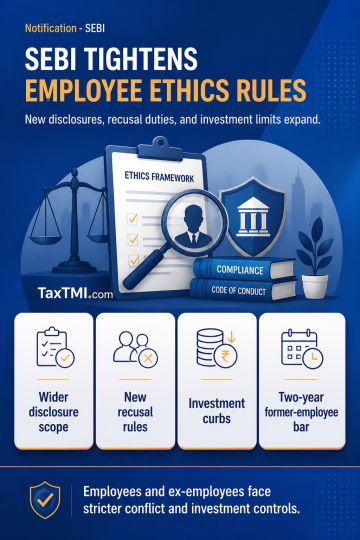
Employee conflict disclosures and investment restrictions expand with new recusal duties, post-employment limits, and compliance reporting requirement...
Page of 4826
Press 'Enter' after typing page number.
1721 to 1740 of 96510 Results
❮
❯
❯❯
0 / 200
Expand Note
Add to Folder
No Folders have been created
+
Are you sure you want to delete "My most important" ?
TDS on leave fare concession payments was disputed where the assessee bank had treated the benefit as exempt, but employees had undertaken foreign-leg journeys. Although the substantive exemption under section 10(5) was found against the assessee, the Tribunal held that liability as an assessee in default could not be fastened for the relevant period because binding interim High Court directions governed deduction of tax on LFC payments. Non-deduction in compliance with those judicial orders did not attract the rigours of section 201(1) or consequential interest under section 201(1A), and the subsequent Supreme Court ruling could not retrospectively create that default. The demand and interest were deleted.
TDS on leave fare concession payments was disputed where the assessee bank had treated the benefit as exempt, but employees had undertaken foreign-leg journeys. Although the substantive exemption under section 10(5) was found against the assessee, the Tribunal held that liability as an assessee in default could not be fastened for the relevant period because binding interim High Court directions governed deduction of tax on LFC payments. Non-deduction in compliance with those judicial orders did not attract the rigours of section 201(1) or consequential interest under section 201(1A), and the subsequent Supreme Court ruling could not retrospectively create that default. The demand and interest were deleted.
Note: It is a system-generated summary and is for quick reference only.
 TaxTMI
  TaxTMI
 of 4826








 Join Channel