Transfer pricing and tax deductions upheld on established principles, while employee contributions and warranty provisions returned for fresh examinat...
Captive transfer pricing relies on industrial consumer tariffs, while genuine quotations can benchmark effluent treatment transfers under the Other Me...
Specific tariff classification for ophthalmic instruments and extended limitation principles determine the treatment of duty demands, confiscation, an...
Integrated golf function determines classification, placing launch monitors and simulators under other golf equipment rather than measuring instrument...
Public servant status under anti-corruption law extends to recognised stock exchange leadership; constitutional and sanction challenges do not succeed...
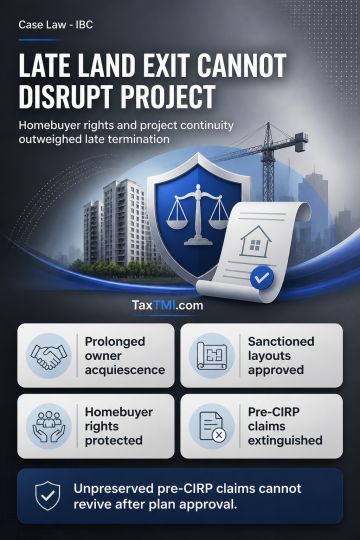
Acquiescence, homebuyer protection and clean-slate resolution principles prevent landowners from disrupting an integrated project through late termina...
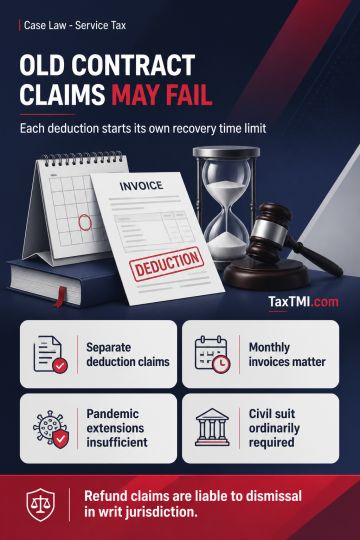
Deductions made from sub-contractors' bills were held to be consideration for taxable business support services, not mere reimbursement of CSR or labour welfare . The Tribunal found that the appellant produced no material to show that the recoveries represented actual expenditure incurred on behalf of the contractors' workmen, and the uniform percentage deduction from bill value indicated a quid pro quo for administrative and operational support. The plea of double taxation failed because the contractors' construction service and the appellant's separate support service were distinct taxable activities. The extended period of limitation was also upheld, as the recoveries were not disclosed in returns and the change in nomenclature after audit supported suppression of facts with intent to evade tax.
Deductions made from sub-contractors' bills were held to be consideration for taxable business support services, not mere reimbursement of CSR or labour welfare . The Tribunal found that the appellant produced no material to show that the recoveries represented actual expenditure incurred on behalf of the contractors' workmen, and the uniform percentage deduction from bill value indicated a quid pro quo for administrative and operational support. The plea of double taxation failed because the contractors' construction service and the appellant's separate support service were distinct taxable activities. The extended period of limitation was also upheld, as the recoveries were not disclosed in returns and the change in nomenclature after audit supported suppression of facts with intent to evade tax.
Note: It is a system-generated summary and is for quick reference only.
 TaxTMI
  TaxTMI
 of 4826













 Join Channel


