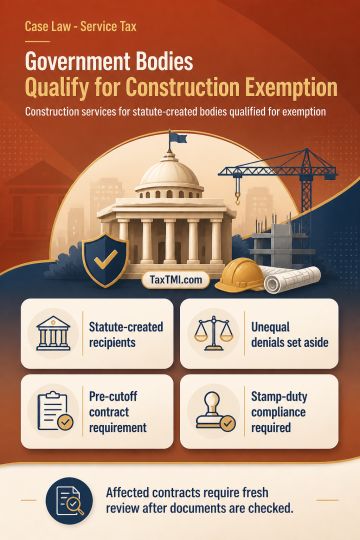
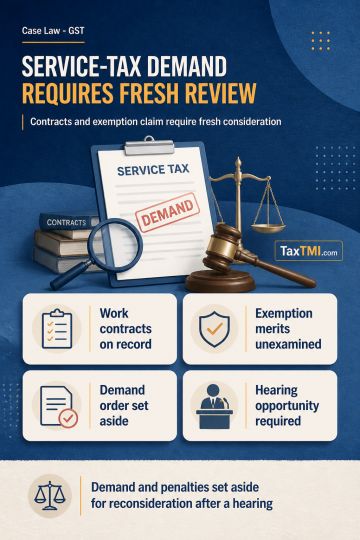
Governmental authority status supports construction-service exemption, while pre-cutoff contract and stamp-duty compliance requires verification on re...
Automated Free Sale and Commerce Certificates enable paperless processing while retaining risk-based manual verification for selected exporter applica...
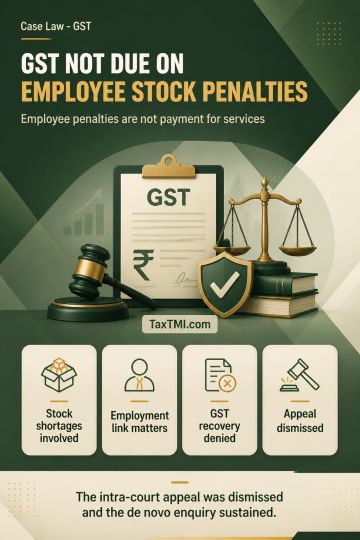
Employee stock-shortage penalties do not constitute consideration for services, preventing GST collection under Schedule II in employment relationship...
After approval of a resolution plan, CIRP does not remain a live insolvency proceeding capable of de novo revival merely because the successful resolution applicant later defaults in implementation. The NCLAT held that failure to perform even under a revised payment schedule does not permit the process to be reopened afresh; the statutory course in such circumstances is liquidation. The Tribunal also noted that an applicant who had already sought liquidation under Section 33 could not later take an inconsistent stand and ask for restoration of CIRP and appointment as Resolution Professional. The application for revival was therefore held not maintainable, and the appeal was dismissed, leaving liquidation to proceed.
After approval of a resolution plan, CIRP does not remain a live insolvency proceeding capable of de novo revival merely because the successful resolution applicant later defaults in implementation. The NCLAT held that failure to perform even under a revised payment schedule does not permit the process to be reopened afresh; the statutory course in such circumstances is liquidation. The Tribunal also noted that an applicant who had already sought liquidation under Section 33 could not later take an inconsistent stand and ask for restoration of CIRP and appointment as Resolution Professional. The application for revival was therefore held not maintainable, and the appeal was dismissed, leaving liquidation to proceed.
Note: It is a system-generated summary and is for quick reference only.
 TaxTMI
  TaxTMI
 of 4827








 Join Channel


