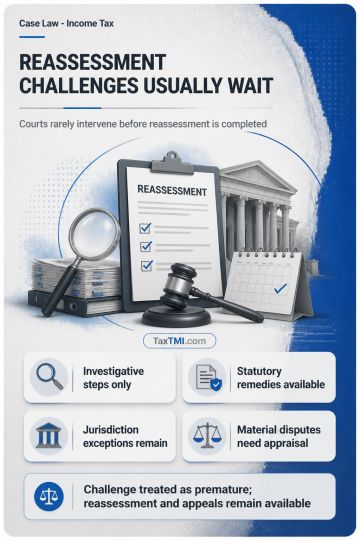
Preliminary reassessment proceedings generally require statutory remedies unless jurisdiction is wholly absent or mandatory conditions are patently br...
Agricultural land classification requires cumulative factual indicators, while industrial-purpose land and absent agricultural use defeat reinvestment...
After approval of a resolution plan, CIRP does not remain a live insolvency proceeding capable of de novo revival merely because the successful resolution applicant later defaults in implementation. The NCLAT held that failure to perform even under a revised payment schedule does not permit the process to be reopened afresh; the statutory course in such circumstances is liquidation. The Tribunal also noted that an applicant who had already sought liquidation under Section 33 could not later take an inconsistent stand and ask for restoration of CIRP and appointment as Resolution Professional. The application for revival was therefore held not maintainable, and the appeal was dismissed, leaving liquidation to proceed.
After approval of a resolution plan, CIRP does not remain a live insolvency proceeding capable of de novo revival merely because the successful resolution applicant later defaults in implementation. The NCLAT held that failure to perform even under a revised payment schedule does not permit the process to be reopened afresh; the statutory course in such circumstances is liquidation. The Tribunal also noted that an applicant who had already sought liquidation under Section 33 could not later take an inconsistent stand and ask for restoration of CIRP and appointment as Resolution Professional. The application for revival was therefore held not maintainable, and the appeal was dismissed, leaving liquidation to proceed.
Note: It is a system-generated summary and is for quick reference only.
 TaxTMI
  TaxTMI
 of 4828















 Join Channel


