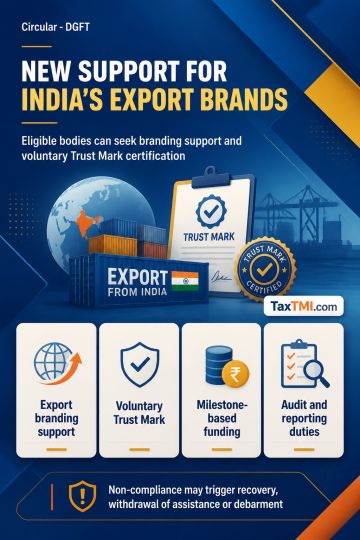
Unified Brand India framework introduces voluntary Trust Mark certification and funding support for export branding, packaging and global promotional ...
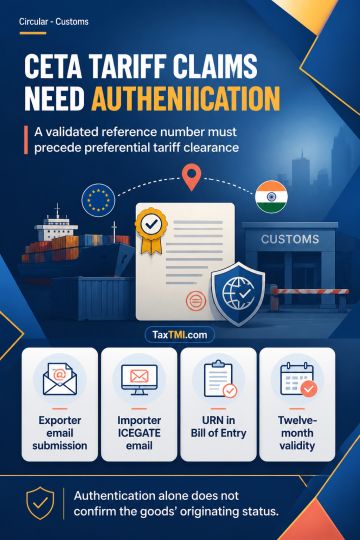
Origin Declaration authentication governs preferential tariff claims under India-UK CETA, requiring a validated reference number before import clearan...
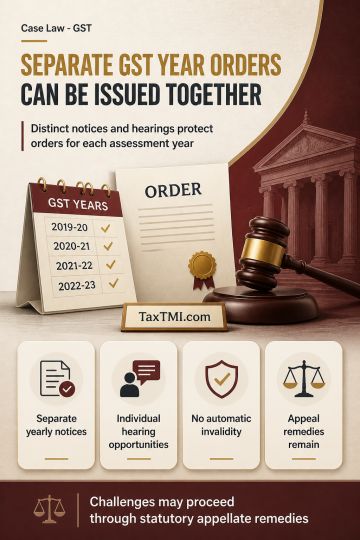
Separate assessment orders for different years remain valid when distinct notices and hearing opportunities prevent prejudice from combined proceeding...
Defined public benefit can retain charitable character; registration renewal requires examining genuine activities and legal compliance, not surplus a...
Capital reduction is distinct from share buy-back, preventing buy-back tax; restructuring interest and related business deductions also survive scruti...
The Tribunal explained that "proceeds of crime" under Section 2(1)(u) can extend to property of equivalent value where the actual tainted property is not traceable, applying a three-limb reading of the definition and supporting authority. It held that provisional attachment may therefore be sustained on equivalent-value property if a prima facie nexus with the scheduled offence exists. The appellants' claim that a subcontractor was responsible for the forged invoices was rejected because contractual responsibility remained with the appellants and the asserted transfers were not proved by reliable records. The Tribunal also found that the contractual deduction for non-deposit of drums did not undermine the attachment, and it rejected the challenge that the adjudication order was merely a template order.
The Tribunal explained that "proceeds of crime" under Section 2(1)(u) can extend to property of equivalent value where the actual tainted property is not traceable, applying a three-limb reading of the definition and supporting authority. It held that provisional attachment may therefore be sustained on equivalent-value property if a prima facie nexus with the scheduled offence exists. The appellants' claim that a subcontractor was responsible for the forged invoices was rejected because contractual responsibility remained with the appellants and the asserted transfers were not proved by reliable records. The Tribunal also found that the contractual deduction for non-deposit of drums did not undermine the attachment, and it rejected the challenge that the adjudication order was merely a template order.
Note: It is a system-generated summary and is for quick reference only.
 TaxTMI
  TaxTMI
 of 4826










 Join Channel