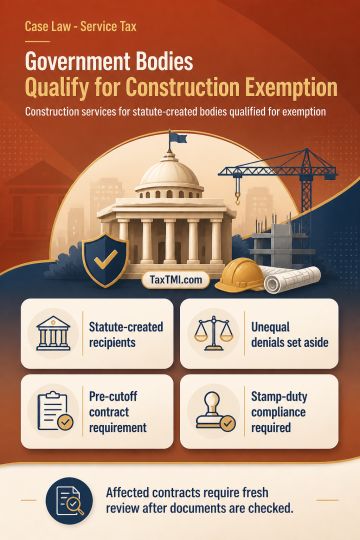
Governmental authority status supports construction-service exemption, while pre-cutoff contract and stamp-duty compliance requires verification on re...
Automated Free Sale and Commerce Certificates enable paperless processing while retaining risk-based manual verification for selected exporter applica...
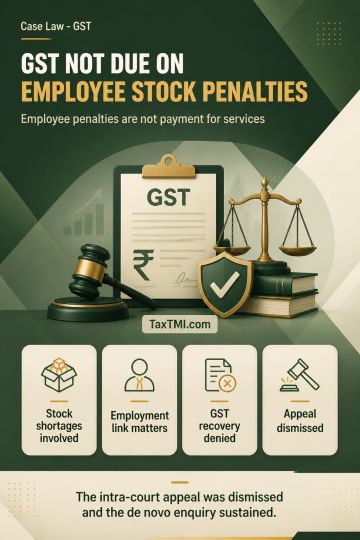
Employee stock-shortage penalties do not constitute consideration for services, preventing GST collection under Schedule II in employment relationship...
Section 142(3) of the CGST Act does not create a fresh refund right where the underlying CENVAT credit entitlement had already expired under the six-month limit from the duty-paying document. The Tribunal held that credit on the challan dated 09.05.2019 could be taken only until 09.11.2019, so a later transitional refund claim was time-barred. The COVID limitation extension could not revive a claim that had already lapsed before the pandemic period. It also held that excess payment against the bill of entry was customs duty, so any refund had to be claimed under Section 27 of the Customs Act; reliance on the EODC was misplaced.
Section 142(3) of the CGST Act does not create a fresh refund right where the underlying CENVAT credit entitlement had already expired under the six-month limit from the duty-paying document. The Tribunal held that credit on the challan dated 09.05.2019 could be taken only until 09.11.2019, so a later transitional refund claim was time-barred. The COVID limitation extension could not revive a claim that had already lapsed before the pandemic period. It also held that excess payment against the bill of entry was customs duty, so any refund had to be claimed under Section 27 of the Customs Act; reliance on the EODC was misplaced.
Note: It is a system-generated summary and is for quick reference only.
 TaxTMI
  TaxTMI
 of 4828








 Join Channel


