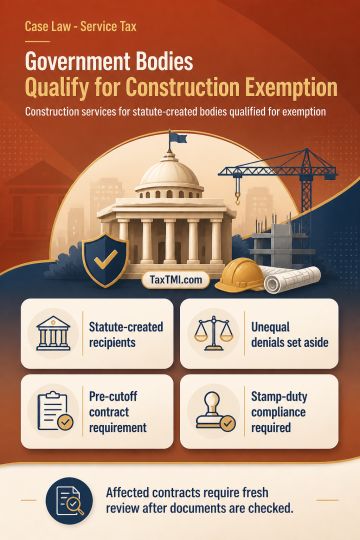
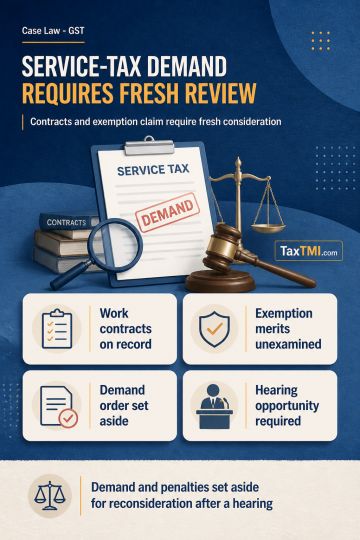
Governmental authority status supports construction-service exemption, while pre-cutoff contract and stamp-duty compliance requires verification on re...
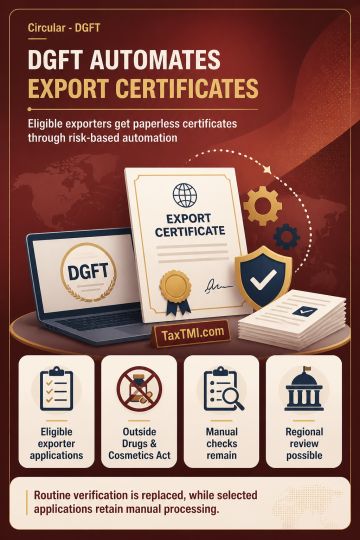
Automated Free Sale and Commerce Certificates enable paperless processing while retaining risk-based manual verification for selected exporter applica...
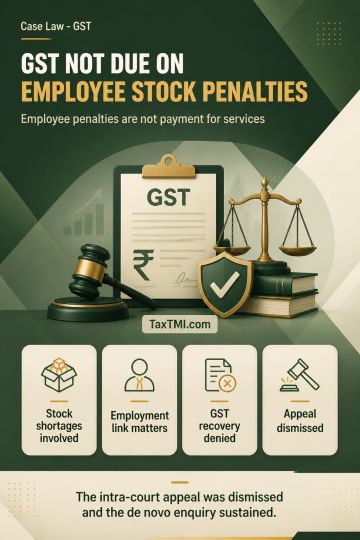
Employee stock-shortage penalties do not constitute consideration for services, preventing GST collection under Schedule II in employment relationship...
Cross-charge payments made under a cost-sharing arrangement on a cost-to-cost basis, without markup, were held to be pure reimbursement and not income; mere charging of service tax did not alter that character, so no TDS liability arose and disallowance under section 40(a)(ia) was unwarranted. The court also held that the second proviso to section 40(a)(ia), as introduced by the Finance Act, 2012, is curative and operates retrospectively; where the resident payee had reported the income, paid tax, and the requisite certificate was furnished, the payer could not be treated as an assessee in default. The Revenue's appeal was dismissed.
Cross-charge payments made under a cost-sharing arrangement on a cost-to-cost basis, without markup, were held to be pure reimbursement and not income; mere charging of service tax did not alter that character, so no TDS liability arose and disallowance under section 40(a)(ia) was unwarranted. The court also held that the second proviso to section 40(a)(ia), as introduced by the Finance Act, 2012, is curative and operates retrospectively; where the resident payee had reported the income, paid tax, and the requisite certificate was furnished, the payer could not be treated as an assessee in default. The Revenue's appeal was dismissed.
Note: It is a system-generated summary and is for quick reference only.
 TaxTMI
  TaxTMI
 of 4828



 Join Channel


