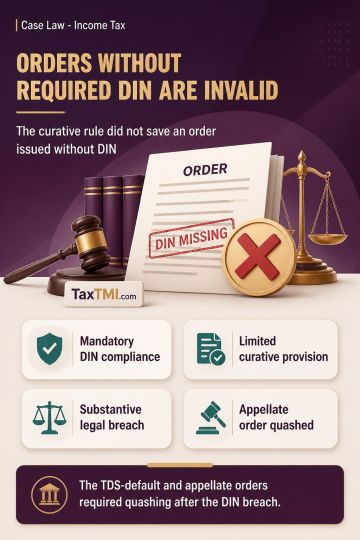
Document Identification Number compliance renders TDS-default orders invalid where mandatory DIN requirements are breached and curative provision does...
NCLAT held that a resolution plan was non-responsive where the earnest money deposit was not actually credited within the time required by the RFRP; debit of the bidder's account on the due date was insufficient, and the Resolution Professional erred in accepting the bid. The Tribunal also held that a dissenting financial creditor had locus to challenge the process because its objections had already been raised in CoC meetings and concerned alleged violations of the Code and value maximisation. Finding that the continuation of the CIRP against the corporate debtor and the role of the Resolution Professional required reassessment, the Tribunal set aside the impugned order, declared the Valentis plan invalid, and directed evaluation of the remaining plans and legal scrutiny of whether the CIRP still subsisted.
NCLAT held that a resolution plan was non-responsive where the earnest money deposit was not actually credited within the time required by the RFRP; debit of the bidder's account on the due date was insufficient, and the Resolution Professional erred in accepting the bid. The Tribunal also held that a dissenting financial creditor had locus to challenge the process because its objections had already been raised in CoC meetings and concerned alleged violations of the Code and value maximisation. Finding that the continuation of the CIRP against the corporate debtor and the role of the Resolution Professional required reassessment, the Tribunal set aside the impugned order, declared the Valentis plan invalid, and directed evaluation of the remaining plans and legal scrutiny of whether the CIRP still subsisted.
Note: It is a system-generated summary and is for quick reference only.
 TaxTMI
  TaxTMI
 of 4918