Minimum alternate tax exclusions for pre-amendment banking companies and expatriate Indian branch salaries remain outside head office expenditure limi...
Bona fide disclosure requirements govern under-reporting penalties, and post-penalty immunity applications cannot secure available statutory protectio...
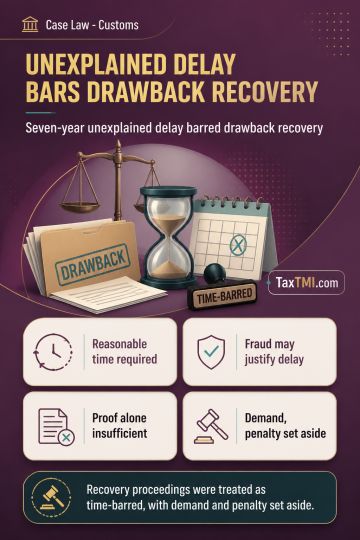
Certificate-of-origin verification procedure governs preferential customs benefits; denial without retroactive verification was set aside with consequ...
Disciplinary Committee jurisdiction and mandatory investigation requirements invalidated cancellation of an insolvency professional's registration and...
Page of 4824
Press 'Enter' after typing page number.
1581 to 1600 of 96463 Results
❮
❯
❯❯
0 / 200
Expand Note
Add to Folder
No Folders have been created
+
Are you sure you want to delete "My most important" ?
NCLAT held that a resolution plan was non-responsive where the earnest money deposit was not actually credited within the time required by the RFRP; debit of the bidder's account on the due date was insufficient, and the Resolution Professional erred in accepting the bid. The Tribunal also held that a dissenting financial creditor had locus to challenge the process because its objections had already been raised in CoC meetings and concerned alleged violations of the Code and value maximisation. Finding that the continuation of the CIRP against the corporate debtor and the role of the Resolution Professional required reassessment, the Tribunal set aside the impugned order, declared the Valentis plan invalid, and directed evaluation of the remaining plans and legal scrutiny of whether the CIRP still subsisted.
NCLAT held that a resolution plan was non-responsive where the earnest money deposit was not actually credited within the time required by the RFRP; debit of the bidder's account on the due date was insufficient, and the Resolution Professional erred in accepting the bid. The Tribunal also held that a dissenting financial creditor had locus to challenge the process because its objections had already been raised in CoC meetings and concerned alleged violations of the Code and value maximisation. Finding that the continuation of the CIRP against the corporate debtor and the role of the Resolution Professional required reassessment, the Tribunal set aside the impugned order, declared the Valentis plan invalid, and directed evaluation of the remaining plans and legal scrutiny of whether the CIRP still subsisted.
Note: It is a system-generated summary and is for quick reference only.
 TaxTMI
  TaxTMI
 of 4824


















 Join Channel