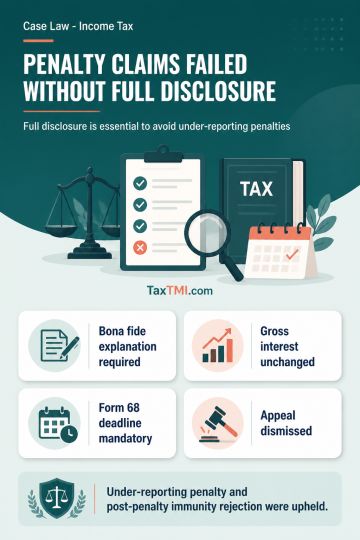
Bona fide disclosure requirements govern under-reporting penalties, and post-penalty immunity applications cannot secure available statutory protectio...
Certificate-of-origin verification procedure governs preferential customs benefits; denial without retroactive verification was set aside with consequ...
Disciplinary Committee jurisdiction and mandatory investigation requirements invalidated cancellation of an insolvency professional's registration and...
Retention of seized property survives where recorded reasons support proceeds of crime, while stayed investigation periods are excluded from limitatio...
Failure to pass on input tax credit benefits under GST was found to constitute profiteering, as the post-GST ITC-to-purchase ratio increased on verified audited figures and the respondent retained the additional benefit instead of passing it to homebuyers. The determined profiteered amount was ordered to be refunded to eligible homebuyers with interest at 18% per annum from the respective dates of collection until refund. Penalty under Section 171(3A) was not imposed because the violation period predated its commencement and the respondent had refunded the amount, attracting the statutory proviso against penalty.
Failure to pass on input tax credit benefits under GST was found to constitute profiteering, as the post-GST ITC-to-purchase ratio increased on verified audited figures and the respondent retained the additional benefit instead of passing it to homebuyers. The determined profiteered amount was ordered to be refunded to eligible homebuyers with interest at 18% per annum from the respective dates of collection until refund. Penalty under Section 171(3A) was not imposed because the violation period predated its commencement and the respondent had refunded the amount, attracting the statutory proviso against penalty.
Note: It is a system-generated summary and is for quick reference only.
 TaxTMI
  TaxTMI
 of 4828















 Join Channel