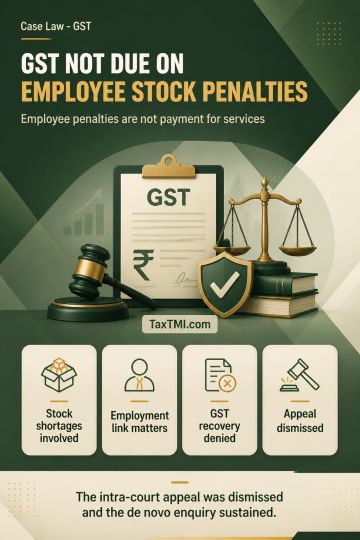
Employee stock-shortage penalties do not constitute consideration for services, preventing GST collection under Schedule II in employment relationship...
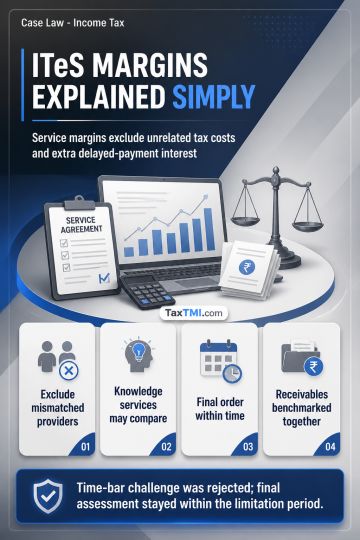
Transfer-pricing treatment of ITeS margins excludes pass-through tax recoveries and separate delayed-receivables interest after working-capital adjust...
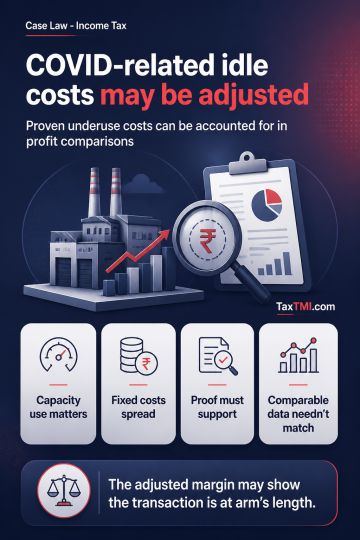
Capacity-utilisation adjustments under TNMM can neutralise substantiated COVID-related idle costs where underutilisation materially affects profitabil...
Page of 4830
Press 'Enter' after typing page number.
181 to 200 of 96587 Results
❮
❯
❯❯
0 / 200
Expand Note
Add to Folder
No Folders have been created
+
Are you sure you want to delete "My most important" ?
Payments by a trust to related concerns do not automatically attract disallowance under Section 13(1)(c); the statutory test is whether application of income or property results in a direct or indirect benefit to persons specified in Section 13(3), and benefit must be established. Higher profit margins or payments alone are insufficient without comparative or evidential material showing payments were excessive, lacked commercial expediency, or constituted diversion of trust income. Where earlier assessment years with identical facts accepted such payments and there is no change in facts or law, the rule of consistency supports maintaining that view and precludes reopening the transactions under Section 13(1)(c).
Payments by a trust to related concerns do not automatically attract disallowance under Section 13(1)(c); the statutory test is whether application of income or property results in a direct or indirect benefit to persons specified in Section 13(3), and benefit must be established. Higher profit margins or payments alone are insufficient without comparative or evidential material showing payments were excessive, lacked commercial expediency, or constituted diversion of trust income. Where earlier assessment years with identical facts accepted such payments and there is no change in facts or law, the rule of consistency supports maintaining that view and precludes reopening the transactions under Section 13(1)(c).
Note: It is a system-generated summary and is for quick reference only.
 TaxTMI
  TaxTMI
 of 4830



 Join Channel


